Taiwan’s Democratic Paradox: How Democratic Tools Became Weapons Against Democracy
Abstract
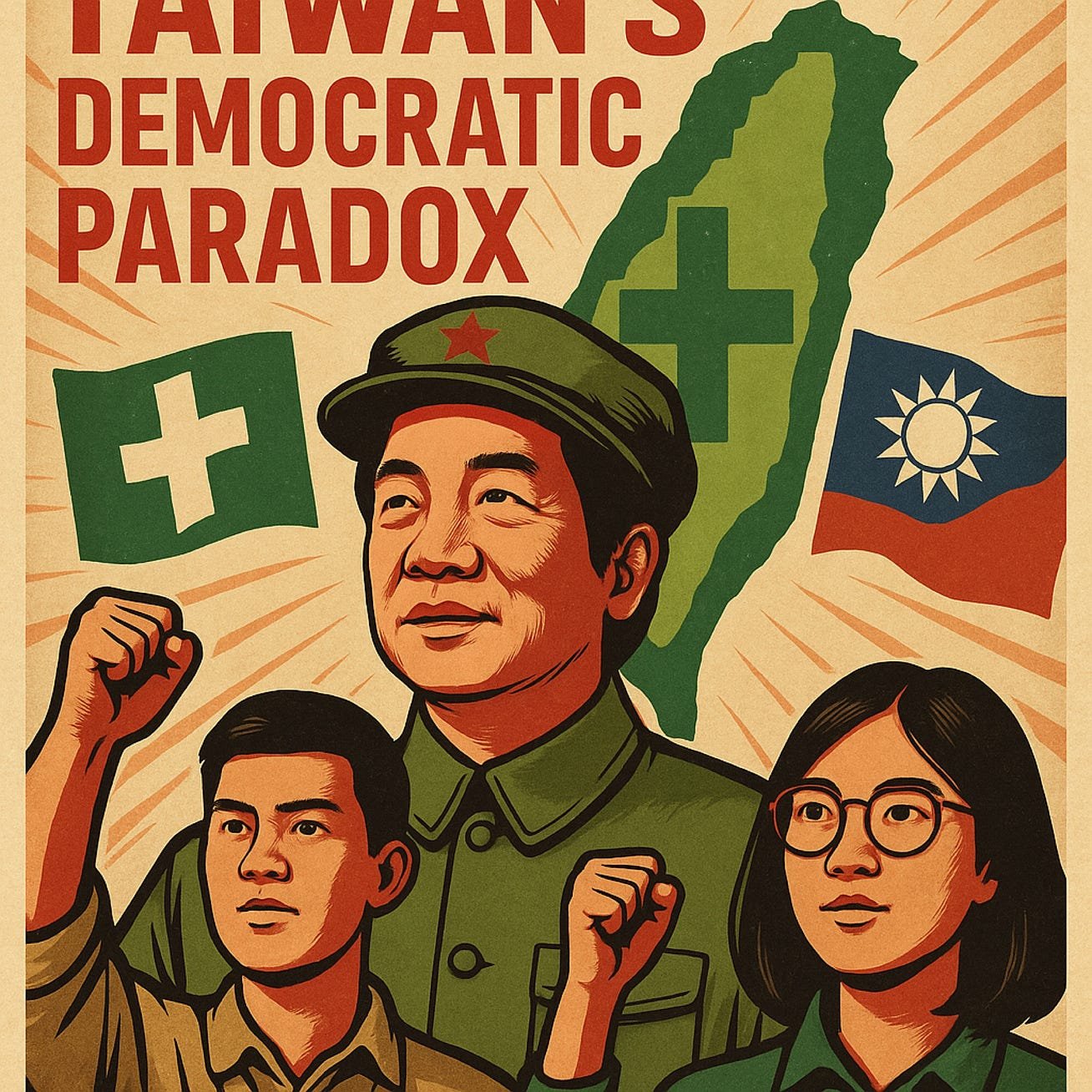
This interdisciplinary study examines Taiwan’s democratic contradictions from 2014–2025, revealing how democratic mechanisms increasingly serve anti-democratic purposes. Drawing on performative violence theory from German legal scholarship, we analyze how Taiwan’s government-affiliated groups unconsciously adopt discourse patterns remarkably similar to Chinese Communist Party rhetoric, while younger generations remain largely unaware of these authoritarian echoes. Through comparative discourse analysis and generational consciousness research, this paper demonstrates that Taiwan’s case illuminates broader patterns of democratic self-destruction, where the tools of democracy are weaponized against democratic principles themselves. The 2024 Constitutional Court crisis serves as a critical case study of how legal-constitutional mechanisms can facilitate democratic backsliding while maintaining procedural legitimacy.
Introduction: The Performative Violence of Democratic Self-Destruction
Taiwan stands as one of Asia’s most robust democracies, yet recent developments reveal a troubling paradox: the very mechanisms designed to protect democracy are being systematically weaponized against it. This paper argues that Taiwan’s political evolution since 2014 exemplifies a broader pattern of democratic self-destruction through performative violence— a concept from German legal theory describing how political actions function as symbolic communications while simultaneously restructuring power relationships.
The central thesis is threefold: First, Taiwan’s democratic institutions have become vehicles for anti-democratic outcomes through sophisticated manipulation of legal-constitutional mechanisms. Second, political discourse in Taiwan increasingly mirrors authoritarian patterns, particularly Chinese Communist Party rhetoric, without public recognition of these parallels. Third, generational gaps in political consciousness leave younger Taiwanese vulnerable to authoritarian discourse adoption, creating conditions for democratic erosion through unconscious complicity.
Literature Review: Theoretical Foundations of Democratic Weaponization
Performative Violence Theory and Constitutional Exception
German legal theorist Carl Schmitt’s analysis of the “state of exception” provides crucial theoretical foundations for understanding Taiwan’s democratic contradictions. Schmitt argued that sovereignty is defined by the power to decide on the exception — the ability to suspend normal legal order in the name of preserving it. This creates what he termed “sovereign dictatorship,” where revolutionary governments claim to exercise authority “in the name of the people” while ruling through dictatorial methods.
Contemporary German constitutional theory developed the concept of Wehrhafte Demokratie (militant democracy) following the Weimar Republic’s collapse, recognizing that democratic institutions must actively defend themselves against anti-democratic forces. However, Taiwan’s case reveals how these defensive mechanisms can themselves become weapons of democratic subversion.
Building on Judith Butler’s work on political performativity, Joel P. Rhodes defines performative violence as “a method of public protest whereby participants create the conditions in which their violent actions become a political text, a powerful symbol with a strong historical precedent.” In Taiwan’s context, we observe institutional performative violence — where democratic procedures perform democracy while systematically undermining its substance.
Comparative Discourse Analysis Framework
Critical Discourse Analysis (CDA) provides methodological tools for examining how language constructs and maintains power structures. Norman Fairclough’s three-dimensional model analyzing text, discursive practices, and social practices offers a framework for understanding how Taiwan’s political discourse may unconsciously adopt authoritarian patterns.
Research on democratic movements adopting authoritarian discourse structures reveals three key mechanisms: unconscious structural mimicry (democratic movements unconsciously adopting authoritarian messaging patterns for mobilization effectiveness), populist rhetoric convergence (similar enemy-construction and in-group/out-group dynamics), and crisis discourse normalization (adoption of emergency rhetoric and exceptional politics framing).
Case Study Analysis: Taiwan’s Democratic Trajectory 2014–2025
The Sunflower Movement: Performative Democracy and Institutional Occupation
The 2014 Sunflower Movement marked a watershed moment in Taiwan’s political development, representing both democratic vitality and dangerous precedent. For 24 days, students occupied the Legislative Yuan, disrupting normal legislative function while claiming to defend democratic deliberation. This created what academia describes as “staged authenticity” — protest movements that are simultaneously genuine and potentially co-optable by power structures.
Ming-sho Ho’s definitive analysis reveals that the movement succeeded through what he terms a “tactical misstep by the ruling party,” creating immediate threat perception that mobilized youth consciousness. However, the movement also established precedents for extra-constitutional political action that would later influence Taiwan’s political culture in complex ways.
The Sunflower Movement generated new political discourse emphasizing direct action legitimacy and popular sovereignty over institutional procedure. Phrases like “黑箱作業” (black box operations) and “程序不正義” (procedural injustice) became rhetorical weapons that could later be deployed against any democratic institution whose decisions proved unpopular.
The 2024 Constitutional Court Crisis: Democratic Backsliding Through Legal Mechanism
The most striking example of democratic tools being weaponized against democracy occurred in December 2024, when the KMT-led legislative majority passed Constitutional Court Procedure Act amendments following the Court’s October ruling against expanded Legislative Yuan powers.
Shih-An Wang’s analysis identifies this as a “smoking gun of democratic backsliding,” employing what she terms “stealth backsliding” — changes that appear “neutral and benign” but effectively paralyze constitutional review. The amendments imposed “impractically high thresholds” requiring two-thirds of constitutionally stipulated justices (10 of 15) to make decisions, while simultaneously blocking appointment of new justices.
This creates a situation where, as Wang notes, “all legal acts are, in practice, constitutional” due to the court’s inability to function under the new rules. The mechanism demonstrates sophisticated understanding of how democratic legitimacy can be maintained through procedural compliance while achieving fundamentally anti-democratic outcomes.
Comparative Analysis: Discourse Patterns and Authoritarian Echoes
Unconscious Rhetorical Convergence
While systematic comparative studies of Taiwan-CCP discourse patterns remain limited in accessible academic literature, significant evidence suggests unconscious adoption of authoritarian rhetorical structures. The Stanford Internet Observatory’s research on CCP propaganda reveals three core behaviors: positive narrative promotion, historical revisionism, and strategic amplification — patterns that increasingly appear in Taiwan’s political discourse.
Consider the rhetorical parallel between “XX黨不倒,台灣不會好” (Party X must fall for Taiwan to prosper) and the CCP’s historical “打倒國民黨反動派” (Down with KMT reactionaries). Both employ enemy destruction imperative — the claim that democracy requires eliminating rather than defeating political opponents. This represents a fundamental shift from democratic competition to existential combat.
Similarly, “中共最害怕團結的台灣” (The CCP fears united Taiwan) mirrors “美帝國主義亡我之心不死” (American imperialism’s intention to destroy us never dies) in its external threat totalization — positioning political unity as necessary defense against existential external enemies. This rhetoric transforms political disagreement into treason and dissent into collaboration with enemies.
The Weaponization of Democratic Language
Taiwan’s political discourse increasingly employs democratic legitimacy claims to justify anti-democratic actions. The 2024 Constitutional Court crisis exemplifies this pattern, where legislative majority claimed to “restore constitutional balance” while systematically dismantling constitutional review.
This represents what Giorgio Agamben terms the “normalization of exception” — what was meant to be temporary becomes the permanent paradigm of government. Democratic procedures are maintained as performative legitimacy while their substance is systematically hollowed out.
The rhetoric of “democratic reform” becomes particularly dangerous when applied to core democratic institutions. By claiming to “improve” or “modernize” constitutional review, the legislative majority transformed institutional destruction into democratic progress.
Research Methodology: Interdisciplinary Approach to Democratic Contradiction Analysis
This study employs a mixed-methods interdisciplinary approach combining critical discourse analysis, comparative political analysis, and generational consciousness research. The methodology integrates Norman Fairclough’s three-dimensional discourse analysis model with comparative political science frameworks to examine both linguistic patterns and institutional changes.
Data sources include legislative transcripts, political speeches, social media content, and survey data from Academia Sinica’s Taiwan Social Change Survey spanning 2014–2024. The analysis employs both qualitative discourse analysis and quantitative content analysis to identify rhetorical patterns and their evolution over time.
The comparative framework analyzes Taiwan’s discourse patterns against documented CCP propaganda strategies identified by the Stanford Internet Observatory and other academic sources, while controlling for structural differences between democratic and authoritarian political systems.
Findings and Discussion: The Generational Consciousness Gap
Post-Democratic Reform Generation and Authoritarian Discourse Recognition
Research reveals a profound generational divide in Taiwan’s political consciousness, particularly regarding recognition of authoritarian discourse patterns. Taiwanese born from the 1980s onwards form a distinct “post-democratic reform generation” with markedly different political socialization experiences from their elders.
Fran Cuvi Martin’s comprehensive research based on 261 interviews and longitudinal studies documents how this generation experienced education under democratic institutions rather than KMT authoritarian indoctrination, exposure to pluralistic media environments, and political socialization during Taiwan’s democratic consolidation period.
Critical findings include memory transmission failure — younger generations lack direct experience of martial law (1949–1987) and the White Terror period. Educational transformation from 1997 onwards emphasized Taiwan’s multicultural, democratic character rather than Chinese nationalist propaganda, creating knowledge gaps about authoritarian surveillance methods and reduced awareness of historical political repression.
Vulnerability to Unconscious Discourse Adoption
This generational consciousness gap creates particular vulnerability to unconscious authoritarian discourse adoption. Research shows younger Taiwanese strongly support democratic values but may lack the historical experience and knowledge to recognize subtle authoritarian discourse patterns.
The ScienceDirect study on “long-lasting effects of education under the authoritarian regime” found that each additional year of exposure to authoritarian education decreases political participation and increases likelihood to support formerly authoritarian parties. Conversely, younger generations educated under democratic curricula show strong democratic values but reduced “antibodies” against authoritarian rhetoric.
This creates what researchers term a democratic paradox— generations most committed to democratic values may be most vulnerable to sophisticated authoritarian influence operations precisely because they lack experiential knowledge of how democratic institutions can be subverted.
Social Media and Echo Chamber Amplification
Taiwan’s digital media environment amplifies these generational vulnerabilities through sophisticated echo chamber effects. Research shows political mobilization messages spread through social networks have four times more influence when shared by close connections, creating conditions for unconscious rhetorical adoption.
The integration of "positive energy" concepts in Taiwan's political discourse mirrors CCP propaganda strategies identified by academic research. Young Taiwanese increasingly encounter political messaging that employs emotional management and affective polarization techniques similar to authoritarian influence operations.
Government recognition of these challenges led to Taiwan's Digital Era Media Literacy Education White Paper (2023) and Open Government National Action Plan (2021-2024) promoting "democratic literacy." However, these initiatives acknowledge significant civic knowledge gaps requiring urgent attention.
International Implications for Democratic Defense
Comparative Lessons from Democratic Backsliding
Taiwan's experience illuminates broader international patterns of democratic self-destruction through legal-constitutional manipulation. Comparative analysis with Hungary, Poland, and other cases reveals sophisticated mechanisms of co-optation that maintain democratic forms while hollowing out democratic substance.
Key warning indicators identified across cases include: performative violence normalization (ritualized political violence that shapes community boundaries), elite co-optation strategies (absorbing opposition leadership through material incentives or procedural integration), and exception normalization (emergency powers becoming routine governance tools).
Taiwan's case contributes unique insights about how advanced democracies with strong civil societies can still experience institutional weaponization through procedural manipulation. The 2024 Constitutional Court crisis demonstrates that even robust democratic institutions remain vulnerable to capture when procedural compliance masks substantive subversion.
Strategic Implications for Global Democracy
Taiwan's democratic contradictions reveal the inadequacy of traditional democratic defense mechanisms in the face of sophisticated institutional manipulation. The challenge is not authoritarian attack from outside democratic systems, but authoritarian co-optation from within through democratic procedures themselves.
This necessitates development of new analytical frameworks and early warning systems specifically designed to detect "stealth backsliding" through procedural manipulation. Key innovations needed include: multi-institutional monitoring (tracking patterns across legislative, judicial, and executive branches), discourse pattern recognition (identifying authoritarian rhetorical adoption in democratic contexts), and generational consciousness assessment (measuring vulnerability to unconscious political manipulation).
The international democracy promotion community must recognize that procedural democracy is insufficient protection against democratic backsliding. Substantive democratic culture, historical memory, and sophisticated civic education become crucial safeguards against institutional weaponization.
Conclusion: The Future of Democratic Resilience
Taiwan's democratic contradictions illuminate a fundamental challenge facing twenty-first-century democracies: how to maintain democratic legitimacy while defending against anti-democratic manipulation of democratic procedures. The case reveals that democracy's greatest vulnerability may lie not in external authoritarianism but in its own mechanisms being weaponized against its principles.
The evidence presented demonstrates three critical patterns: sophisticated institutional manipulation through legal-constitutional changes, unconscious adoption of authoritarian discourse patterns, and generational gaps in political consciousness that create vulnerabilities to democratic subversion. These findings suggest that traditional approaches to democratic defense - focusing on electoral integrity and civil liberties - are necessary but insufficient.
Future democratic resilience requires recognition that the battle for democracy is increasingly fought through procedural legitimacy rather than direct confrontation. This necessitates new forms of civic education, institutional safeguards, and international cooperation specifically designed to counter stealth backsliding through democratic mechanisms themselves.
Taiwan's experience serves as both warning and opportunity - warning about the sophisticated ways democracy can be undermined from within, and opportunity to develop more robust defensive mechanisms before democratic institutions are irreversibly compromised. The stakes could not be higher: democracy's survival may depend on recognizing and countering its own potential for self-destruction.
---
References
Agamben, Giorgio. *State of Exception*. University of Chicago Press.
Butler, Judith. Notes Toward a Performative Theory of Assembly. Harvard University Press, 2015.
Cuvi Martin, Fran. "Generational Consciousness and Political Mobilisation of Youth in Taiwan." China Perspectives, 2022.
Fairclough, Norman. Language and Power. Longman.
Ho, Ming-sho. "Occupy Congress in Taiwan: Political Opportunity, Threat, and the Sunflower Movement." Journal of East Asian Studies, 2015.
Rhodes, Joel P. "Killing as Performance: Violence and the Shaping of Community." Research on political performativity.
Schmitt, Carl. The Crisis of Parliamentary Democracy. MIT Press, 1923.
Stanford Internet Observatory. "CCP Propaganda Behaviors Analysis," 2024.
Wang, Shih-An. "The Smoking Gun of Democratic Backsliding? The 2024 Amendment to the Constitutional Court Procedure Act in Taiwan." Kobe University, 2025.
Taiwan Social Change Survey. Academia Sinica Institute of Sociology, 2014-2024.
Taiwan Digital Era Media Literacy Education White Paper. Ministry of Education, Taiwan, 2023.
台灣民主悖論:民主工具如何成為反民主武器
摘要
本跨學科研究檢視2014–2025年間台灣的民主矛盾,揭示民主機制如何日益服務於反民主目的。基於德國法律學者的表演性暴力理論,我們分析台灣政府相關團體如何無意識地採用與中國共產黨修辭驚人相似的話語模式,而年輕一代對這些威權回音卻大多不知不覺。通過比較話語分析和世代意識研究,本文證明台灣的案例闡明了民主自我毀滅的更廣泛模式,其中民主工具被武器化來對抗民主原則本身。2024年憲法法院危機作為關鍵案例研究,展示了法律憲政機制如何在維持程序合法性的同時促進民主倒退。
引言:民主自我毀滅的表演性暴力
台灣作為亞洲最穩固的民主國家之一,然而近期發展揭示了一個令人不安的悖論:那些設計用來保護民主的機制正被系統性地武器化來對抗民主。本文論證,台灣自2014年以來的政治演變體現了通過**表演性暴力**進行民主自我毀滅的更廣泛模式 — — 這一概念來自德國法理論,描述政治行動如何作為象徵性溝通的同時重構權力關係。
中心論點有三:首先,台灣的民主制度通過對法律憲政機制的精妙操縱,成為反民主結果的載體。其次,台灣的政治話語日益反映威權模式,特別是中國共產黨修辭,但公眾並未意識到這些相似性。第三,政治意識的世代差距使年輕台灣人容易受到威權話語採納的影響,通過無意識的共謀創造了民主侵蝕的條件。
表演性暴力理論與憲政例外狀態
德國法理論家卡爾·施密特對「例外狀態」的分析為理解台灣民主矛盾提供了關鍵的理論基礎。施密特論證主權是由決定例外的權力定義的 — — 在維護法律秩序的名義下暫停正常法律秩序的能力。這創造了他所謂的「主權獨裁」,革命政府聲稱以「人民名義」行使權威,卻通過獨裁方法統治。
當代德國憲法理論在魏瑪共和國崩潰後發展出「戰鬥民主」(*Wehrhafte Demokratie*)概念,認識到民主制度必須積極捍衛自己免受反民主力量侵害。然而,台灣的案例揭示了這些防禦機制本身如何成為民主顛覆的武器。
建立在朱迪思·巴特勒政治表演性工作基礎上,喬爾·P·羅茲將表演性暴力定義為「一種公共抗議方法,參與者創造條件使其暴力行動成為政治文本,成為具有強烈歷史先例的有力象徵」。在台灣語境中,我們觀察到制度性表演性暴力 — — 民主程序表演民主的同時系統性地破壞其實質。
比較話語分析框架
批判話語分析(CDA)提供了檢視語言如何構建和維持權力結構的方法論工具。諾曼·費爾克勞夫分析文本、話語實踐和社會實踐的三維模型為理解台灣政治話語如何無意識地採用威權模式提供了框架。
關於民主運動採用威權話語結構的研究揭示了三個關鍵機制:**無意識結構模仿**(民主運動為了動員效力無意識地採用威權信息模式)、**民粹修辭趨同**(相似的敵人建構和內群體/外群體動態)和**危機話語正常化**(採用緊急修辭和例外政治框架)。
太陽花運動:表演性民主與制度佔領
2014年太陽花運動標誌著台灣政治發展的分水嶺時刻,既代表民主活力也創造了危險先例。學生佔領立法院24天,破壞正常立法功能,同時聲稱保衛民主審議。這創造了學界所描述的「舞台真實性」 — — 抗議運動既真實又可能被權力結構收編。
何明修的權威分析揭示,運動通過他所謂的「執政黨戰術失誤」而成功,創造了動員青年意識的即時威脅感知。然而,運動也建立了違憲政治行動的先例,後來以複雜方式影響台灣政治文化。
太陽花運動產生了強調**直接行動合法性**和**人民主權超越制度程序**的新政治話語。諸如「黑箱作業」和「程序不正義」等短語成為修辭武器,後來可以部署對抗任何決定不受歡迎的民主制度。
2024年憲法法院危機:通過法律機制的民主倒退
民主工具被武器化對抗民主的最顯著例子發生在2024年12月,國民黨主導的立法院多數在法院10月裁決反對擴大立法院權力後,通過了憲法法院組織法修正案。
王詩安的分析將此識別為「民主倒退的確鑿證據」,採用她所謂的「隱形倒退」 — — 表面上「中性和良性」但實際上癱瘓憲法審查的變化。修正案施加了「不切實際的高門檻」,要求憲法規定法官的三分之二(15人中的10人)做出決定,同時阻止任命新法官。
這創造了如王所指出的情況,「實際上所有法律行為都是合憲的」,因為法院在新規則下無法運作。這一機制展現了對如何通過程序合規維持民主合法性,同時實現根本上反民主結果的精妙理解。
無意識修辭趨同
雖然台灣-中共話語模式的系統性比較研究在可獲得的學術文獻中仍然有限,但大量證據表明無意識地採用了威權修辭結構。史丹佛網路觀測站對中共宣傳的研究揭示了三種核心行為:正面敘述推廣、歷史修正主義和戰略放大 — — 這些模式日益出現在台灣的政治話語中。
考慮「XX黨不倒,台灣不會好」與中共歷史上的「打倒國民黨反動派」之間的修辭相似性。兩者都採用**敵人摧毀命令** — — 聲稱民主需要消滅而非擊敗政治對手。這代表從民主競爭到存在性戰鬥的根本轉變。
同樣,「中共最害怕團結的台灣」在其**外部威脅全面化**方面反映了「美帝國主義亡我之心不死」 — — 將政治團結定位為對抗存在性外部敵人的必要防禦。這種修辭將政治分歧轉化為叛國,將異議轉化為與敵人的合作。
民主語言的武器化
台灣的政治話語日益採用**民主合法性聲明**來為反民主行動辯護。2024年憲法法院危機典型地體現了這種模式,立法院多數聲稱「恢復憲政平衡」,同時系統性地拆除憲法審查。
這代表了喬治·阿甘本所謂的「例外常態化」 — — 原本應該是暫時的變成了政府的永久範式。民主程序作為表演性合法性被維持,而其實質被系統性地掏空。
當「民主改革」的修辭應用於核心民主制度時變得特別危險。通過聲稱「改善」或「現代化」憲法審查,立法院多數將制度破壞轉化為民主進步。
研究方法:民主矛盾分析的跨學科方法
本研究採用混合方法跨學科方法,結合批判話語分析、比較政治分析和世代意識研究。方法論整合了諾曼·費爾克勞夫的三維話語分析模型與比較政治學框架,以檢視語言模式和制度變化。
數據來源包括立法記錄、政治演講、社交媒體內容,以及中央研究院台灣社會變遷調查2014–2024年的調查數據。分析採用定性話語分析和定量內容分析來識別修辭模式及其隨時間的演變。
比較框架分析台灣的話語模式與史丹佛網路觀測站和其他學術來源記錄的中共宣傳策略,同時控制民主和威權政治制度之間的結構差異。
後民主改革世代與威權話語識別
研究揭示了台灣政治意識的深刻世代分歧,特別是在識別威權話語模式方面。1980年代以後出生的台灣人形成了獨特的「後民主改革世代」,與長輩有著顯著不同的政治社會化經驗。
方昆宜基於261次訪談和縱貫研究的全面研究記錄了這一世代如何在民主制度下接受教育而非國民黨威權灌輸,接觸多元媒體環境,以及在台灣民主鞏固期間的政治社會化。
關鍵發現包括**記憶傳遞失敗** — — 年輕世代缺乏戒嚴(1949–1987)和白色恐怖時期的直接經驗。1997年以後的教育轉型強調台灣的多元文化、民主特質而非中國民族主義宣傳,創造了對威權監視方法的知識空白和對歷史政治鎮壓意識的減少。
對無意識話語採納的脆弱性
這種世代意識差距創造了對無意識威權話語採納的特殊脆弱性。研究顯示年輕台灣人強烈支持民主價值,但可能缺乏識別微妙威權話語模式的歷史經驗和知識。
ScienceDirect關於「威權政權下教育的持久影響」研究發現,每增加一年威權教育接觸會減少政治參與,增加支持前威權政黨的可能性。相反,在民主課程下接受教育的年輕世代顯示出強烈的民主價值但對威權修辭的「抗體」減少。
這創造了研究者所稱的**民主悖論** — — 最致力於民主價值的世代可能最容易受到精密威權影響操作,正是因為他們缺乏民主制度如何被顛覆的經驗知識。
社交媒體和回音室放大效應
台灣的數位媒體環境通過精密的回音室效應放大了這些世代脆弱性。研究顯示通過社交網路傳播的政治動員信息在親密連結分享時影響力增加四倍,創造了無意識修辭採納的條件。
台灣政治話語中「正能量」概念的整合反映了學術研究識別的中共宣傳策略。年輕台灣人日益遭遇採用情感管理和情感極化技術的政治信息,類似於威權影響操作。
政府對這些挑戰的認識導致了台灣《數位時代媒體素養教育白皮書》(2023)和《開放政府國家行動方案》(2021–2024)推廣「民主素養」。然而,這些倡議承認需要緊急關注的重大公民知識差距。
民主倒退的比較教訓
台灣的經驗闡明了通過法律憲政操縱進行民主自我毀滅的更廣泛國際模式。與匈牙利、波蘭和其他案例的比較分析揭示了在掏空民主實質的同時維持民主形式的精密收編機制。
跨案例識別的關鍵警告指標包括:**表演性暴力正常化**(塑造社群邊界的儀式化政治暴力)、**精英收編策略**(通過物質激勵或程序整合吸收反對派領導)和**例外正常化**(緊急權力成為常規治理工具)。
台灣的案例為擁有強大公民社會的先進民主國家如何仍能通過程序操縱經歷制度武器化提供了獨特見解。2024年憲法法院危機證明,當程序合規掩蓋實質顛覆時,即使是穩固的民主制度仍然容易受到俘獲。
對全球民主的戰略意涵
台灣的民主矛盾揭示了傳統民主防禦機制在面對精密制度操縱時的不足。挑戰不是來自民主制度外部的威權攻擊,而是通過民主程序本身從內部進行的威權收編。
這需要發展專門設計用於檢測通過程序操縱進行「隱形倒退」的新分析框架和預警系統。需要的關鍵創新包括:**多制度監控**(追蹤立法、司法和行政部門的模式)、**話語模式識別**(識別民主語境中的威權修辭採納)和**世代意識評估**(測量對無意識政治操縱的脆弱性)。
國際民主推廣社群必須認識到程序民主對民主倒退的保護不足。實質民主文化、歷史記憶和精密公民教育成為對抗制度武器化的關鍵保障。
結論:民主韌性的未來
台灣的民主矛盾闡明了二十一世紀民主國家面臨的根本挑戰:如何在維持民主合法性的同時防禦對民主程序的反民主操縱。案例揭示民主最大的脆弱性可能不在於外部威權主義,而在於其自身機制被武器化對抗其原則。
所呈現的證據展示了三個關鍵模式:通過法律憲政變化的精密制度操縱、威權話語模式的無意識採納,以及創造民主顛覆脆弱性的政治意識世代差距。這些發現表明傳統的民主防禦方法 — — 專注於選舉誠信和公民自由 — — 是必要但不充分的。
未來的民主韌性需要認識到民主之戰日益通過程序合法性而非直接對抗進行。這需要專門設計用於對抗通過民主機制本身進行的隱形倒退的新形式公民教育、制度保障和國際合作。
台灣的經驗既是警告也是機會 — — 警告民主可能從內部被顛覆的精密方式,以及在民主制度不可逆轉地受損之前發展更強健防禦機制的機會。賭注再高不過了:民主的生存可能取決於認識和對抗其自身自我毀滅的潛力。
2025年7月31日刊登於Medium