LU Min
Fashion Technology Innovator | Systemic Reformer | Craft Preserver
CORE IDENTITY
A Prophet Who Witnessed, Trial-and-Errored, and Ultimately Reconstructed an Era Over 28 Years
Min Lu stands at the intersection of fashion, technology, and sustainability as a pioneering force who has witnessed and actively shaped China's complete transformation from "World Factory" to global digital fashion leadership. As the last generation of design professionals possessing comprehensive manufacturing craft skills, she is committed to passing down human craftsmanship in an irreplaceable way while creating systemic solutions that ensure everyone has meaningful work.
Born into a family of professional dancers, her design aesthetic has been profoundly shaped by performance art and interactive experiences—a theatrical foundation that became the cornerstone of her innovative approach to sustainable fashion.
She envisions a fashion industry where technology amplifies human creativity rather than replaces it, where sustainability is economically viable rather than morally imposed, and where traditional craftsmanship is preserved through systemic innovation.
Her work demonstrates that being ahead of time is not about prediction, but about persistent commitment to values—from the 1999 thesis on online fashion retail to 2013's pioneering blockchain fashion platform, to today's AI-driven solutions.
The journey from "martyr" to "pioneer" requires not just patience, but the courage to validate direction through repeated attempts, knowing that timing and systemic understanding matter as much as vision.
As the last generation possessing manufacturing craft skills, her mission transcends personal achievement: it is about ensuring that human craftsmanship survives and thrives in the AI era, that everyone has meaningful work, and that fashion becomes a force for systemic positive change rather than exploitation.
EDUCATION
Three Countries, Three Top Schools
IFM Paris (Institut Français de la Mode, France)
Luxury cultural capital and symbolic economyFIT New York (Fashion Institute of Technology, USA)
Industrial logic and market orientation of commercial fashionPOLIMODA (Florence, Italy)
Craftsmanship tradition and family business model
Rejected Master Thesis (1999) → Validated 25 Years Later:
Title: "Forging Ahead: Unleashing the Potential of Online Fashion Retail"
Vision: Establishing completely online fashion brand before the “.com” era
Rejection Reason: Traditional fashion industry didn't accept disruptive thinking
Historical Significance: Foresaw e-commerce era's industry restructuring
Validation: 25 years later, the vision has become reality
INTERNATIONAL BRAND EXPERIENCE
Global Fashion Houses (New York, Paris, Shanghai)
Donna Karan | Systematic logic of top American commercial fashion brands
Oscar de la Renta | High-profit mass market sub-brand modelMass market
Givenchy Haute-Couture | French haute couture craftsmanship standards
Hugo Boss | Digital practice of German industrial fashion aesthetics
Geoffrey Beene | American design heritage
RECOGNITION & HONORS
Awards & Recognition
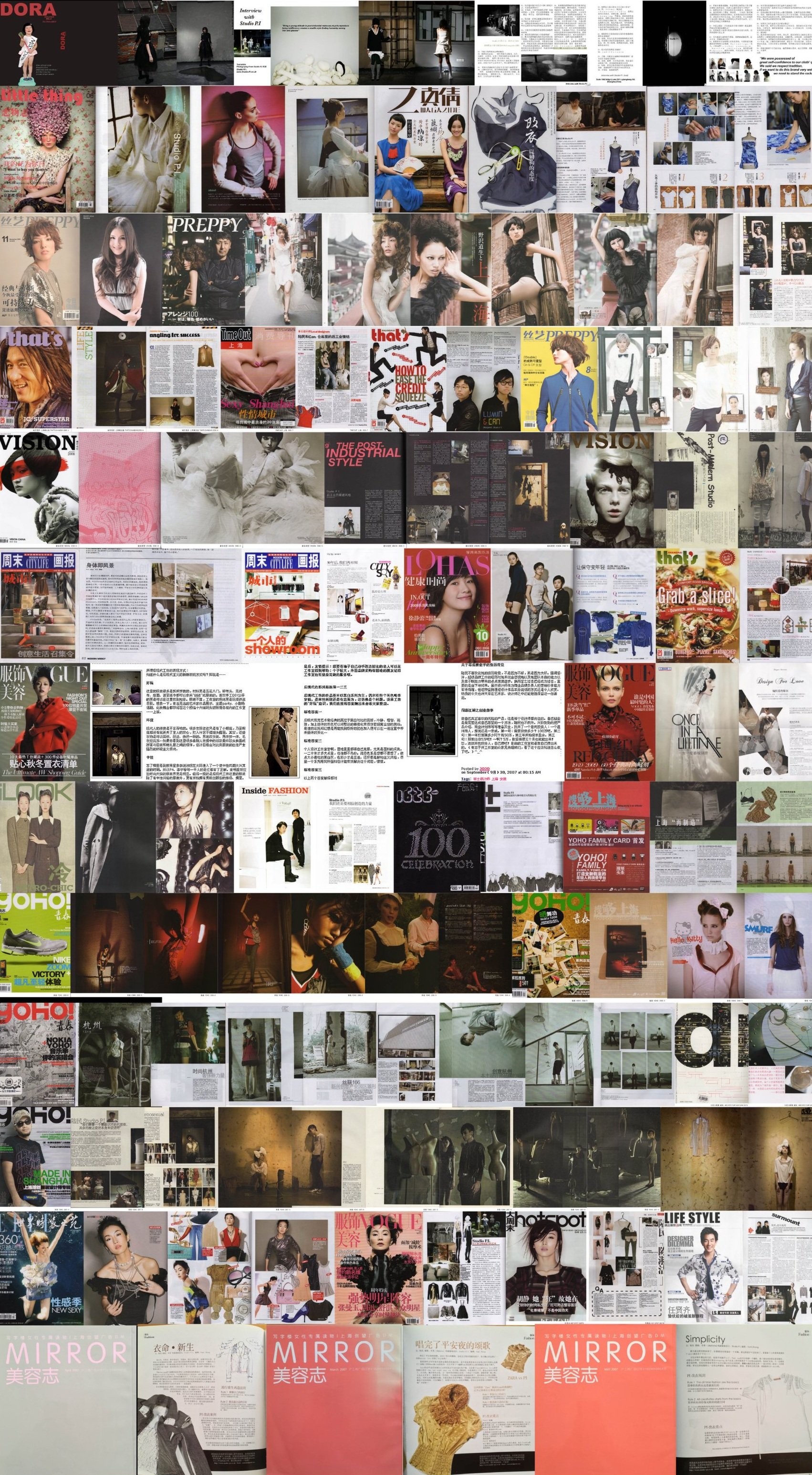
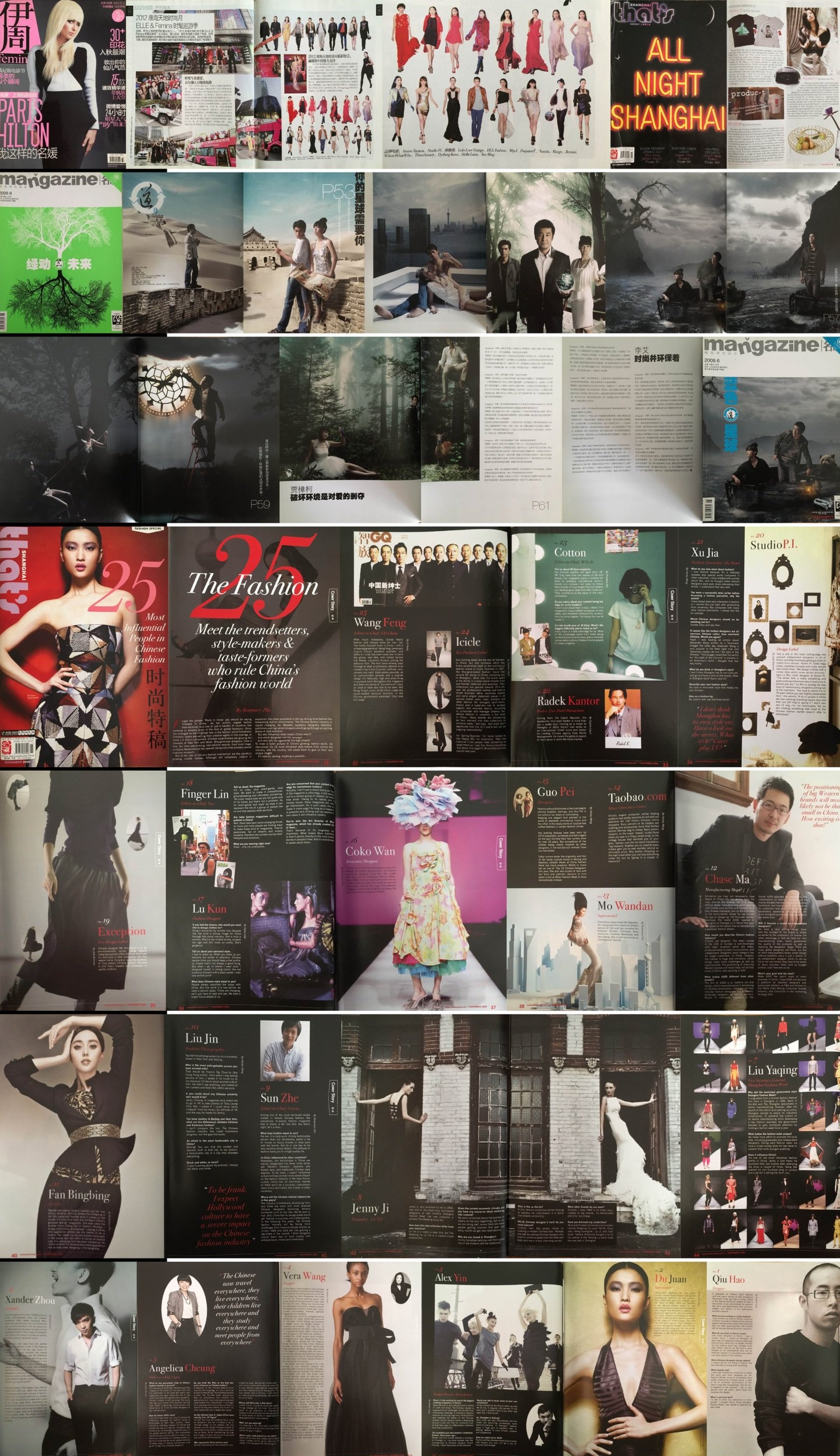
2007 | China's 25 Most Influential Fashion New Forces #19
2007 | ADC Hybrid Award Black Cube Nike + Wieden+Kennedy Team Member
Created revolutionary upcycled imperial robe from Nike products (5kg weight, 14 basketball shoes, 50 jerseys, 26 shorts)
2007 | Taipei 12% Design Exhibition
2010 | WWF Collaboration at Shanghai World Expo
Sustainable Fashion Series - Only Chinese fashion designer featured at NGO Pavilion2026 | First Future Illusion AIGC Si-Fi Short Film award Free Style ( Commercial ) 3rd Place
2026 | 浦軟創業營第十二期 AINX 聚力之星獎
Sustainable Innovation Certifications
2021 | Solar Impulse Efficient Solution Label - #CycSatellites Decentralized sustainable economic model
2025 | Solar Impulse Efficient Solution Label - HarmonAIze Human-centered, AI-assisted data-driven platform (member of the World Alliance for Efficient Solutions for nearly 5 years)
Recent Recognition (2025)
Lanfinitas AI
Selected for AI Innovation Application Product List
Equator Q Startup Acceleration Program
Google Cloud
2025 | Solar Impulse Efficient Solution Showcase — Lanfinitas AI
Recent Recognition (2026)
Lanfinitas AI
Part of the NVIDIA Inception program
Stron Annual Pitch Event — semi-finalist
TEACHING & EDUCATION LEADERSHIP
International Teaching Experience
La Salle-DHU (Shanghai)
ESSCA (France-China Project)
Raffles College of Design (Singapore Model in China)
NYU Shanghai
Detao Masters (Master Class Model)
Mod'Art Paris (Shanghai)
Curriculum Development
Lectures encompass:
History of contemporary Chinese fashion
Sustainable fashion practices
Fashion marketing and management
Visual merchandising
Sensorial marketing
Design development
Educational Philosophy: Focus on bridging the gap between Western fashion education (which has become an "education industry" producing unemployable graduates) and Chinese fashion education (which lacks brand integration concepts and quality-design recognition).
INNOVATION JOURNEY
The 26-Year Consistent Vision (1999-2025)
Phase Zero: Visionary Foundations (1999-2007)
1999 | Master Thesis "Forging Ahead"
Proposed completely online fashion brand before .COM era
Rejected by traditional fashion industry
Validated 25 years later as prophetic vision
2007 | Token Equity Concept
Conceived brand expansion through sales reward token exchange
Consumer-to-shareholder model (DAO prototype)
Shelved due to Chinese compliance issues (deemed illegal fundraising)
Historical significance: 14 years ahead of 2021 NFT/DAO boom
First decentralized thinking in Chinese fashion
Phase One: Web3 Pioneer Experiment (2013)
2013 | Utopium/瘾城 - China's First Bitcoin Fashion E-commerce
Revolutionary Features:
Bitcoin payment acceptance (2013, when Bitcoin wasn't mainstream)
Own Utopium token system
China's first "Shop + Community" experimental platform
Aggregated 15 global design creative brands (Fashion, Accessories, Music, Media, Home furnishings, Furniture)
Team Configuration:
First cross-border international team leadership
Israeli freelance team + Indian outsourcing team
Completed development in 3 months
Framework: Magento (mainstream e-commerce framework at the time)
Forward-Looking Layout (2013, became mainstream in 2021):
Issue own Coin (Utopium token)
Circular economy reward program
Token equity mechanism (DAO prototype)
Why It Failed:
Lack of market financing capability
Low awareness of cryptocurrency in Chinese market (2013)
Immature Web3 infrastructure
8-10 years ahead of the market
Historical Significance:
Proved early insight into blockchain + fashion
Validated feasibility of 'community-driven commerce' model
Laid ideological foundation for subsequent CycSatellites and HarmonAIze
Phase Two: Sustainability Learning Curve (2015)
2015 | Organic Children's Products Brand
Concept:
Enter sustainable consumption through children's products
Market education for organic materials
Co-investment with students
Reasons for Failure:
Business logic not suitable for Chinese market
Excessive premium for organic products
Huge consumer education cost
Immature supply chain
Price sensitivity higher than environmental awareness
Cultural differences: Chinese washing machine habits and family structures
Critical Lessons Learned:
Sustainability cannot rely solely on sentiment premium
Must solve systemic cost problems
Provided reflection for subsequent CycSatellites' "cost-reduction and efficiency-improvement sustainability"
Phase Three: Strategic Transformation (2016)
Why Stop Own Brand?
Observations:
Witnessing overcapacity's destructive environmental impact
Second-hand fashion cannot be digested + nearly 1000 new brands/manufacturers/e-commerce platforms join annually
Harsh survival environment for emerging designers
E-commerce price wars lead to quality decline
Industry unable to upgrade technology
Strategic Shift:
From brand operation to system transformation
Designing decentralized solutions to ensure everyone has work
Mission: Passing down craft techniques as the last generation possessing manufacturing skills
Phase Four: Mature Implementation (2021-Present)
2021 | #CycSatellites (Solar Impulse Certified)
Decentralized sustainable economic model
Circular utilization of inventory, increased employment, revitalized funds
Continuing 2007 token equity + 2013 Utopium's decentralization thought
Systemic transformation ensuring everyone has work
Preserving traditional craftsmanship
2023 | Lanfinitas AI - Revolutionary Pattern Making Agent
Revolutionary breakthrough: AI-driven 3D-to-2D pattern making
Conquering fashion's last digitalization challenge
Philosophy: Connects resources rather than replaces humans
Preserving craft knowledge while democratizing access
Google Cloud & GPULink support
2025 | HarmonAIze (Solar Impulse Certified)
Human-centered + AI-assisted platform
Data-driven precise analysis and sustainable upgrade solutions
Learning from 2015 lesson: Sustainability must reduce costs and increase efficiency
Solar Impulse member for nearly 5 years
CURRENT CORE PROJECTS
1. Lanfinitas AI
Revolutionary Innovation:
World's First AI Pattern Making Agent conquering fashion's last digitalization challenge
3D-to-2D transformation workflow using advanced ML and fine-tuning
Addresses fundamental defects in Clo3D/Style3D systems
Technical Approach:
Phase 1: Data Preprocessing
Scan and annotate paper patterns
Clean noise, correct skew
Output standardized intermediate files
Metrics: ≤1% contour-point loss; ≤30s processing time per pattern
Phase 2: Machine Learning Modeling
Design and train base model
Fine-tune hyperparameters
Target: ≥90% contour-reconstruction accuracy
Metrics: Intersection-over-Union (IoU) ≥0.9 on contour matching
Phase 3: Post-processing & File Output
Convert model outputs into standard DXF or PLT files
Preserve editability
Metrics: Full compatibility with CAD software, zero format loss
Phase 4: Continuous Iteration & Optimization
Two-week sprints
Experiment reports + issue lists + optimization plans
Metric comparison against previous cycles
Why Lanfinitas Matters:
Technical bottleneck: Textile material overfitting
No unified data standards
Privatized digital asset barriers
Solution: AI agent connects resources rather than replaces human expertise
Mission: Preserving human craftsmanship as the last generation possessing manufacturing skills
Current Support:
Google Cloud infrastructure
GPULink computational resources
Selected for 2025 AI Innovation Application Product List
Showcased by Solar Impulse Foundation
2. #CycSatellites (Solar Impulse Labeled in 2021 and 2025)
Decentralized Sustainable Economic Model
Core Principles:
Circular utilization of inventory
Increased employment opportunities
Revitalized funds
Preservation of traditional craftsmanship
Innovation:
Continuing 2007 token equity + 2013 Utopium's decentralization thought
Implementing with more mature business model
Systemic transformation ensuring everyone has work
Recognition:
Solar Impulse Efficient Solution Label — received twice, in 2021 and 2025
Certified for environmental and economic profitability
Nearly 5 years as Solar Impulse member
3. HarmonAIze (2025 Solar Impulse Labeled)
Human-Centered, AI-Assisted Sustainable Platform
Features:
Data-driven precise analysis
Sustainable upgrade solutions
Learning from 2015 organic children's products lesson
Key insight: Sustainability must reduce costs and increase efficiency (not moral premium)
Recognition:
Solar Impulse Efficient Solution Label (September 2025)
Dual certification system complete (with #CycSatellites)
ACADEMIC CONTRIBUTIONS & WRITING
Peer-Reviewed Publications
"Re-Negotiating National Identity Through Chinese Fashion"
Co-authored with Dr. Xin Gu
Published in: Fashion Theory: The Journal of Dress, Body and Culture
Volume: 25, Issue 7, pp. 901-915
DOI: 10.1080/1362704X.2021.1971881
Published: September 16, 2021
Abstract Focus:
Emergence of new creative subjectivity in Chinese fashion
Intersection of "Chineseness" and planetary ethical considerations
Sustainable fashion as meaning-making system
Evolution from national identity performance to universal cultural values
Chinese designers' identity negotiation beyond established national context
Key Contributions:
First comprehensive analysis of sustainable fashion identity formation in Chinese context
Critical examination of how meaning-making processes mediate performance of "Chineseness"
Documentation of creative subjectivity evolution within contemporary China
Framework for understanding local meaning-making in global sustainable fashion discourse
Citation Metrics:
1,230 article views
2 citing articles
Published by Routledge/Taylor & Francis
Books & Monographs
1. "Road to #CycSatellites" (In Progress)
Genre: Non-fiction / Business / Design Philosophy
Focus Areas:
13-year journey developing upcycled design methodology
Evolution from individual brand practice to systemic solutions
Intersection of traditional Chinese craftsmanship and circular economy
Personal narrative of sustainable fashion innovation in China
From 2007-2016 brand period to 2021 Solar Impulse certification
Themes:
Human-centered sustainable design
Reducing fashion waste through systemic approaches
Creating employment opportunities in circular fashion economy
Preserving traditional manufacturing techniques
2. "21st Century's Chinese Fashion Chronicle" (In Development)
Critical Position: Rejected academic publisher contract, seeking independent publishing path to maintain intellectual integrity
Why This Book Must Be Written:
1. Fill Structural Knowledge Gap in International Academia
Western scholars lack industry insider perspective
Chinese scholars limited by political sensitivity
Author's unique position: cross-national education + international brands + local practice breaks the impasse
2. Complete Documentation of Traditional to Digital Fashion Transformation
From "World Factory" to "Global Digital Ecosystem Leadership"
Foreign brands' process from dominance to localization
Including "failed pioneer projects" that validated direction but were ahead of their time:
2007 token equity concept
2013 Web3 experiment (Utopium)
2015 organic children's products
Evolution to AI era success
3. Critical Examination of Systemic Issues
Western fashion education: Has become an "education industry" producing unemployable graduates
Chinese fashion education: Lacks brand integration concepts and quality-design recognition
"Sustainability" as compliance game: Deprives Global South of development opportunities, creates new colonial structures
Capital's submission to traffic: Foreign brands' localization is not cultural victory
4. Urgency of Time Window
Key witnesses aging or forgetting
E-commerce era's rapid iteration covering historical traces
If 2007 token equity concept and 2013 Utopium are not documented, they will be forgotten
As the last generation possessing manufacturing craft skills, must document craft preservation methods
Why Reject Academic Publishers:
Position: Dissatisfied with contract conditions
Refusing to compromise academically in exchange for publishing opportunities
Insistence: This history needs complete, truthful, critical documentation including:
Success and failure
Ahead and behind
Systemic contradictions
Critical examination of Western fashion education becoming an "industry"
Critique of "sustainability" as compliance game
Cannot delete or modify core viewpoints due to publishers' commercial considerations
Content Coverage:
Era Witness Perspective:
Late 1990s: "World Factory" of foreign trade processing era
2000s: Local brand awakening and fashion week economy
2010s: E-commerce explosion restructuring consumption patterns
2020s: China's digital fashion ecosystem globally leading
Complete Innovation Cycle Documentation:
1999 Master Thesis → 2007 Token Equity → 2013 Utopium → 2023 Lanfinitas AI
26-year consistent vision spanning technology-empowered and decentralized fashion concept
From "Martyr" to "Pioneer":
Using failure to validate direction
Using time to wait for technology maturity and market readiness
Using systemic thinking to reconstruct solutions
Key insight: Difference is timing + systemic understanding
WITNESS PERSPECTIVE OF THE ERA
1. Traditional Industry → Global Leading Digital Fashion Complete Transformation
Experienced Stages:
Late 1990s: "World Factory" of foreign trade processing era
2000s: Local brand awakening and fashion week economy
2010s: E-commerce explosion (Taobao/Tmall/Pinduoduo) restructuring consumption patterns
2020s: China's digital fashion ecosystem globally leading (live streaming, virtual fitting, AI design)
Core Insight: China's shift from "copying Western models" to "creating unique ecosystems" is not because design is better, but because of leapfrog innovation in digital infrastructure and consumer behavior.
2. Foreign Brands' Localization in China
Witnessed Transformation:
Early (2000s): Western ideology dominance
Defining "premium" with European and American aesthetics
Ignoring real needs of Chinese consumers
Supply chain dependent on China, brand discourse power in the West
Turning Point (Mid-2010s): Market-forced localization
WeChat/Weibo becoming battlegrounds
KOL marketing replacing traditional advertising
Limited editions, collaborations catering to Chinese market
Present (2020s): Following Chinese digital ecosystem
Live streaming as standard configuration
Mini-programs, private domain traffic operations
Chinese market strategy reverse-exported globally
Critical Reflection: This is not a victory of "cultural equality," but capital's submission to traffic. True cultural confidence has not yet been established.
3. Fashion Investment Bubble Cycle (Complete Cycle Experience)
Phase Zero: Token Equity Concept (2007) + Web3 Pioneer Experiment (2013)
2007 forward-thinking: Sales reward token exchange + consumer-to-shareholder model
2013 implementation: Bitcoin payment + Utopium token + DAO mechanism
Why it failed: 8-14 years ahead of market
Phase One: Platform Economy (Early 2010s)
E-commerce platforms received massive funding
Problem: soaring traffic costs, unsustainable cash burning
Phase Two: Sustainable Consumption Exploration (2015)
Attempted with organic children's products
Lesson: Didn't solve systemic cost problems + cultural differences
Phase Three: Second-hand Fashion + Fintech (2015-2019)
Circular economy concept platforms
Bubble burst: high costs, trust issues, capital chain breaks
Phase Four: NFT Speculation (2021-2022)
Digital fashion, brands rushing to release NFTs
Problem: Speculation over application
Phase Five: AI Era (2023-Present)
AI design tools, virtual fitting, smart pattern making
Key difference: No longer "concept speculation," but truly solving industry pain points
Lanfinitas AI represents this phase
Core Insight of Complete Cycle
From "Martyr" to "Pioneer" - 18 Years:
2007 Token Equity: Right direction, wrong timing, compliance barriers
2013 Utopium: Right direction, wrong timing (8 years ahead)
2015 Organic Children: Right concept, wrong method (didn't solve costs + cultural mismatch)
2021 CycSatellites: Right direction + method (decentralization + cost reduction)
2023 Lanfinitas AI: Right timing + technology (AI touches productivity essence)
Methodology:
Using failure to validate direction
Using time to wait for technology maturity and market readiness
Using systemic thinking to reconstruct solutions
THOUGHT SYSTEM AND METHODOLOGY
Core Values
1. Systemic Thinking
Not single-point optimization
Focus on full-chain reconstruction ensuring everyone has work
Addressing root causes rather than symptoms
2. Technology Democratization
Lower barriers, benefit more people
Connect not replace human labor
Preserve human craftsmanship and irreplaceable expertise
3. Humanism
Human-centered design philosophy
AI as assistant, humans irreplaceable
Technology amplifies human creativity rather than replaces it
4. Long-termism
26 years (1999-2025) persisting in same mission
Willing to endure "ahead-of-time" failures
Patience to validate direction through repeated attempts
5. Knowledge Independence
Refusing to compromise academically
Commitment to truth and critical examination
Independent publishing over commercial pressures
6. Craft Preservation
As the last generation possessing manufacturing skills
Must pass down human craftsmanship irreplaceably
Bridging traditional techniques with cutting-edge technology
Unique Insights
On Fashion Industry:
Problem is not lack of design, but systemic imbalance
Western fashion education has become an "education industry"
Chinese fashion education lacks brand integration concepts
On China's Digital Fashion:
Success is not "copy-upgrade," but ecosystem innovation
Digital infrastructure leapfrog enabled unique development path
Foreign brands' localization is capital's submission to traffic
On Sustainable Fashion:
Cannot rely on sentiment premium or material innovation alone
Must reduce costs, extend product lifecycles, ensure everyone has work
Systemically transform while preserving handicraft
"Sustainability as compliance game" deprives Global South opportunities
On Creative Timing:
2007: Right direction but compliance barriers
2013: Right direction but 8 years ahead
2023: Similar approach succeeds—not smarter, but timing matured
"Martyr" vs "Pioneer": Difference is timing + systemic understanding
On AI Era:
Essential difference from previous investment waves
Former is financial game, latter touches productivity essence
Can preserve human irreplaceability while enhancing capabilities
#Era Witness | 时代见证者 • #26-Year Consistency | 26年一贯性 • #Cross-border Practitioner | 跨界实践者 • #Token Economy Pioneer | Token经济先驱 • #Web3 Martyr | Web3先烈 • #Successful Pioneer | 成功的先驱 • #Education Critic | 教育批判者 • #Sustainability Critic | 可持续批判者 • #System Reformer | 系统变革者 • #History Writer | 历史书写者 • #Knowledge Independence | 知识独立 • #Refuse to Compromise | 拒绝妥协 • #Long-termism | 长期主义 • #Technology Democratization | 技术民主化 • #Human-centered AI | 人本AI • #Craft Preserver | 工艺传承者 • #Last Skilled Generation | 最后技能一代 • #Human Irreplaceable | 人类不可替代 • #Global South Advocate | 全球南方倡导者 • #18-Year Validation | 18年验证
Credits
Photos of the site: LU Min, QIAO Yong, Liangzi, Jean-Louis Wolff, Dakuai Studio, LIU Xiao, MIchio Nozawa, XU She-Cheng, and More.