What I can do _ Design
Web
Studio P.I|theutopium|UD2.0|LittleDesignSolution|BoekOverMij
Web — Lanfinitas AI
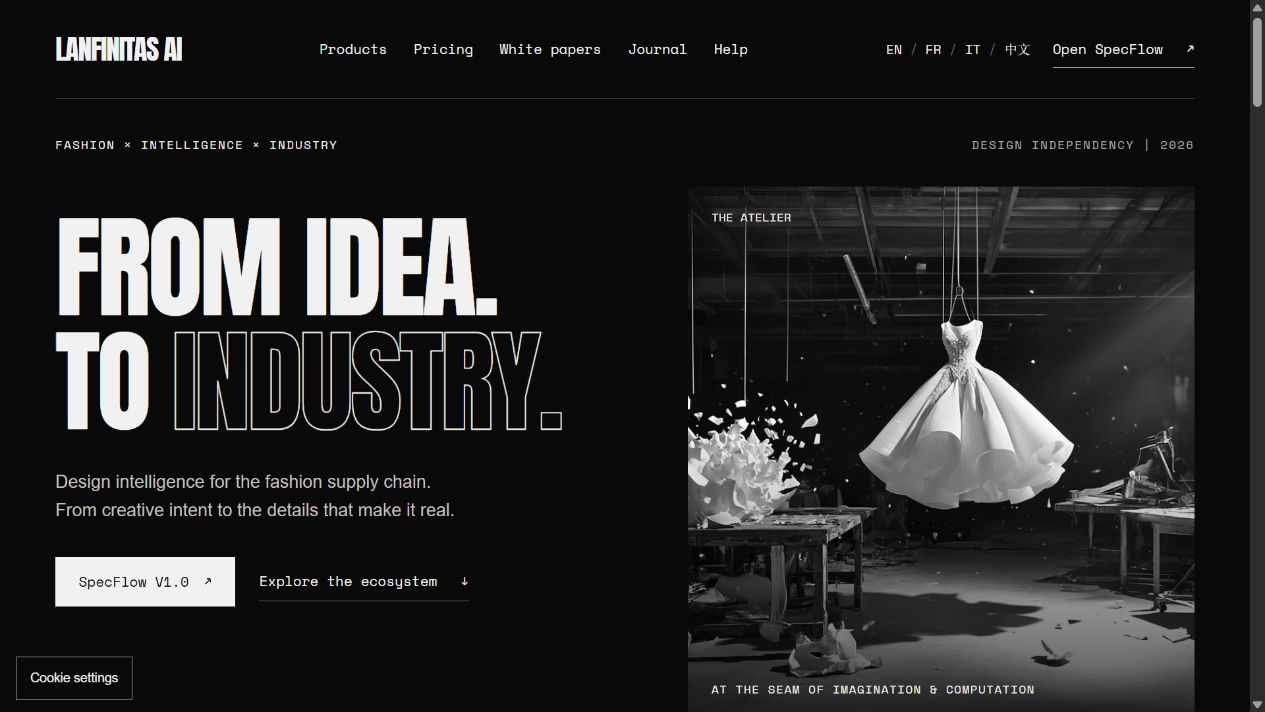
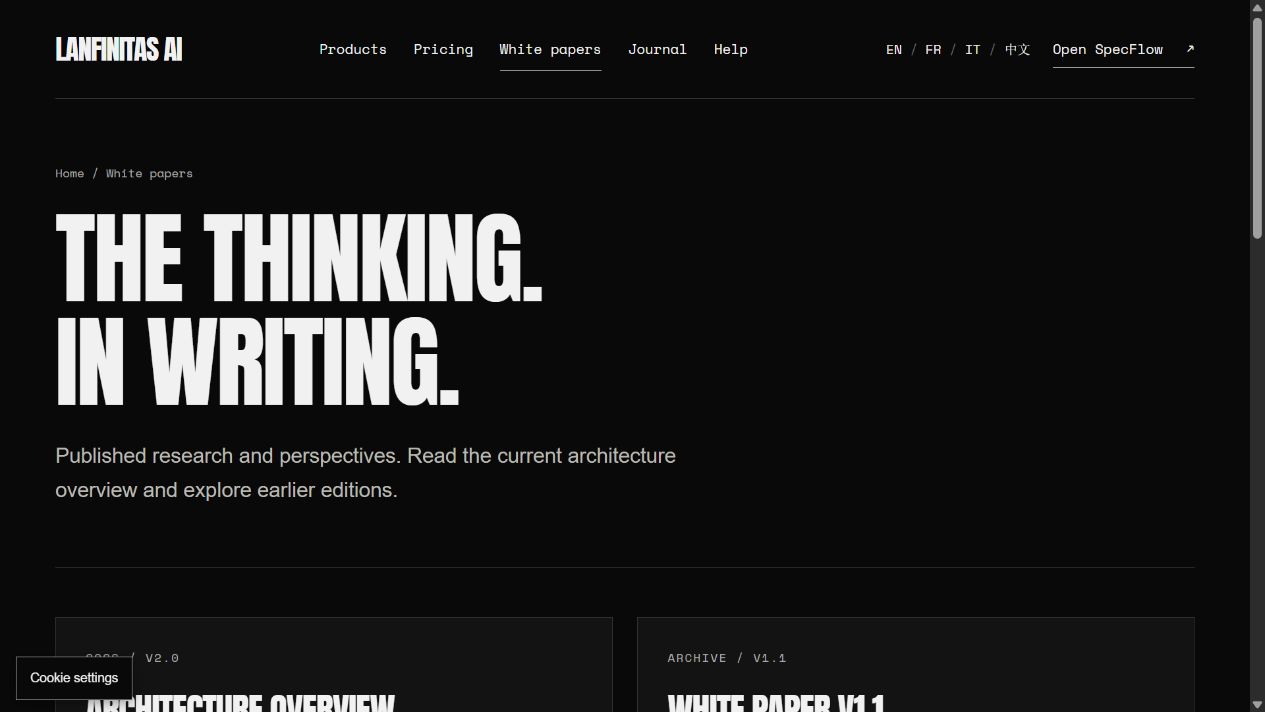
Lanfinitas AI: building a website with a coding agent
Listen — Lanfinitas AI|聆聽 2:53
The Lanfinitas AI website grew out of an AI coding and design project she initiated in 2024. It brought together a long-standing interest in using technology for fashion and a new possibility: working directly with a large-language-model coding agent to turn her own design brief into a functioning website.
An idea that preceded the tools
During her studies in New York, she had begun thinking about how modern technology and the internet could support a conceptual fashion business. In her postgraduate work in France, she explored the idea of a fully online fashion brand without a physical shop. Later, after five years of running a business in China, she saw how limited access to sales channels could restrict independent designers. She commissioned a former classmate to develop a buying platform for designer brands, but the project stopped when investment did not materialise.
When ChatGPT first became widely used, she revisited these ideas with developers. Translating the concept into a shared technical brief remained difficult, and development fees made experimentation expensive. As large-language-model coding tools became more accessible, she saw a way to test ideas through a more direct, iterative conversation.
Starting with a domain and a concept
Her earlier experience included learning Flash web design in New York and leading a team developing fashion-platform websites. Drawing on that background, she decided to explore a startup centred on fashion pattern development. She registered a domain and designed an initial website using Squarespace. At that stage, the site expressed a concept and a slogan; the product and the technical route still needed to be developed.
Learning through two years of development
Over the following two years, she worked as a solo founder and developer, learning alongside AI agents. Front-end design, back-end development and the structure of the wider system became connected parts of that process. She built her understanding through the work itself, moving between design decisions, implementation and refinement.
From the brand brief to a complete website
In September 2026, she brought the existing Squarespace site and the company’s brand structure into a development session with Astra. The brief also incorporated images she had generated for an AI competition in 2025. Daily collaboration with coding agents had already given her practice in explaining the brand’s concepts and reviewing their implementation.
In her account of the process, the first structural version of the website took about forty minutes. She then spent another two to three days working with the agent on the details. The resulting site brought the visual identity, the content and the product entry point into one coherent presentation.
A website and a first product release
The website was released around 30 September 2026, alongside the first version of SpecFlow. For her, it marked the realisation of an idea that had passed through several earlier attempts: using technology to build a fashion business on terms she could develop herself. The website became both the public expression of Lanfinitas AI and an entry point to its first product.
Lanfinitas AI:與編程代理一起建立網站
Lanfinitas AI 的網站,源於她在 2024 年啟動的一項 AI 編程與設計計劃。這個項目把她長期以科技發展時尚的興趣,與一種新的工作方式連接起來:直接與大語言模型編程代理合作,把自己的設計構想轉化為可以運作的網站。
早於工具出現的構想
在紐約求學期間,她已開始思考如何以現代科技和互聯網,支持一個概念型的時尚事業。在法國的研究生學習中,她探索過沒有實體店、完全在線上運作的時尚品牌。其後在中國創業五年,她看見獨立設計師常因銷售渠道有限而遇到瓶頸,於是委託一位以前的同學開發設計師品牌買手平台,但項目最終因投資未能到位而停下來。
ChatGPT 開始廣泛被使用時,她再次與開發者討論這些想法。把概念轉化為雙方共同理解的技術需求,仍然需要很高的溝通成本,開發費用亦令試驗變得昂貴。隨着大語言模型編程工具逐漸容易取得,她看見了透過直接對話與反覆修整來測試構想的可能。
從域名與概念開始
她曾在紐約學習 Flash 網頁設計,也有帶領團隊開發時尚平台網站的經驗。以這些經驗為基礎,她決定嘗試一個圍繞時尚製版發展的創業項目。她註冊域名,並利用 Squarespace 設計最初的網站。當時網站主要表達一個概念與口號,產品本身和技術實現的路徑,都仍然有待建立。
在兩年的開發中邊做邊學
接下來兩年,她以獨立創辦人與開發者的身份,跟着 AI 代理一起學習。前端設計、後端開發,以及整個系統的架構,逐漸成為相互連接的工作。她透過實際製作建立理解,在設計判斷、實現與修整之間不斷往返。
把品牌構想轉化為完整網站
2026 年 9 月,她把原有的 Squarespace 網站與公司的品牌架構,帶入與 Astra 合作的開發過程。需求亦包含她在 2025 年 AI 比賽期間生成的圖像。日常與編程代理的合作,已讓她熟悉如何說明品牌概念,以及如何檢視這些概念的實現方式。
按照她對過程的回顧,網站第一輪的整體架構大約在四十分鐘內完成。其後,她再花兩至三天與代理一起修整細節。完成的網站把視覺識別、內容與產品入口,組織成一個連貫的呈現。
網站與首個產品一起發佈
網站約於 2026 年 9 月 30 日發佈,同時推出第一版 SpecFlow。對她而言,這是經過幾次早期嘗試後,一個長期構想的實現:以科技建立一個能由自己持續開發的時尚事業。網站既成為 Lanfinitas AI 對外的品牌表達,也成為第一個產品的使用入口。
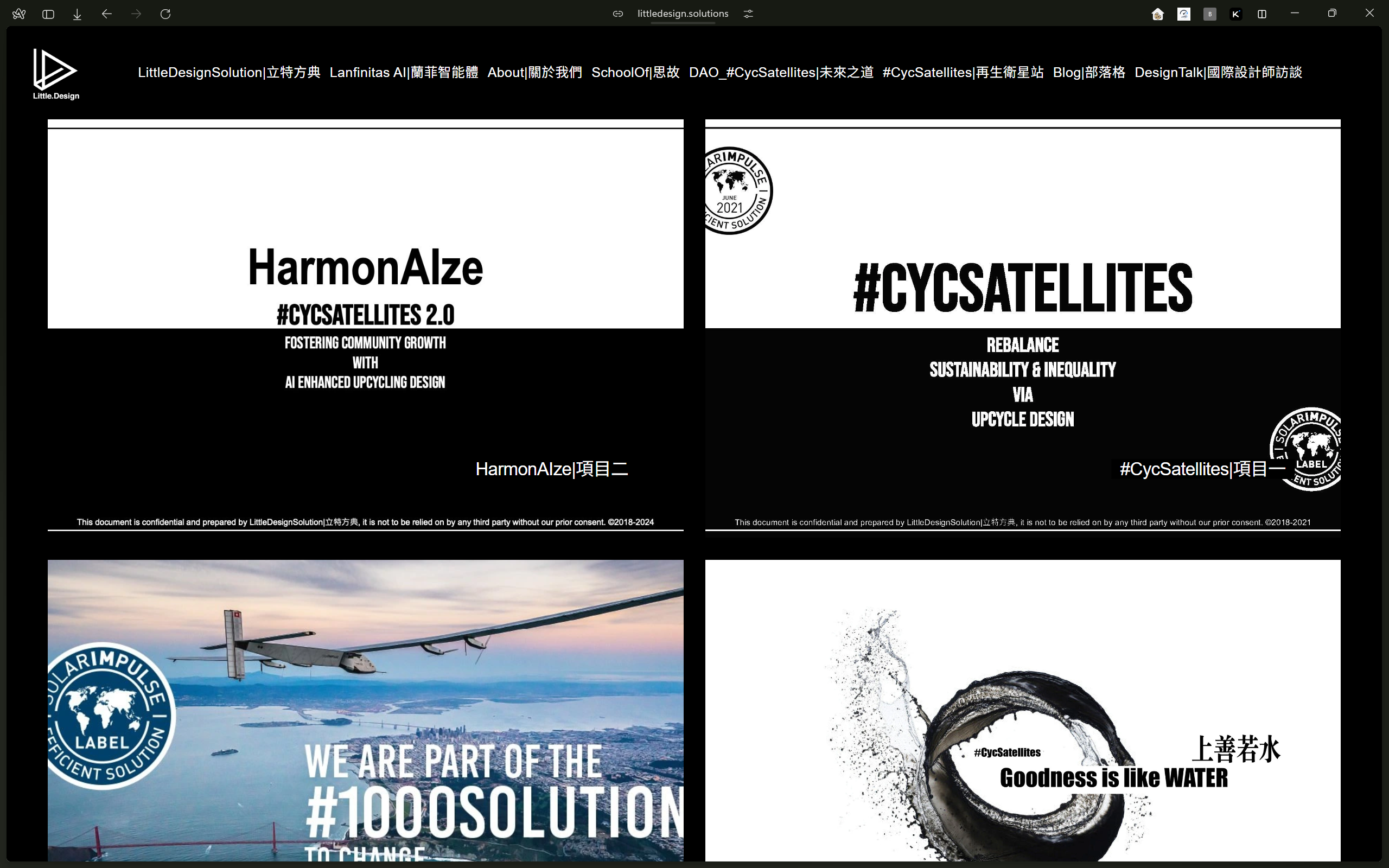
LittleDesignSolution: a website for practical sustainability
Listen — LittleDesignSolution|聆聽 2:21
The LittleDesignSolution website developed over roughly a decade, alongside her work on sustainability and regenerative design. She designed and maintained it herself, revising it several times and moving it between hosting arrangements. Squarespace became part of that process about five to six years ago.
Preserving the design through migration
After completing the Lanfinitas AI website with a coding agent and moving it to hosting she could manage independently, she decided to bring her earlier websites into the same environment. For LittleDesignSolution, the brief was to reproduce the existing design faithfully: its content, visual identity and structure were the starting point for the migration.
The work coincided with changes in the coding tools she used. In her own workflow, she worked with models from 6.0 to 6.1, comparing how they understood a brief and supported implementation. As the experience of working with an agent improved, she also reviewed the website’s own usability and interactions, refining them while preserving its identity.
A structure built around a sustainable future
The site connects her explorations of industrial systems, upcycling and regenerative design with branding, education and possible future forms of organisation. These are parts of one question: how can design produce solutions that remain workable over time and contribute positively to society?
Her focus is on the conditions that allow an idea to operate in practice. Alongside the conceptual work, she considers existing inventory, methods of remaking garments, the capabilities of production machinery and the infrastructure of a wider supply chain. The website brings these scales together, from an individual material or technique to the systems needed to support it.
Design, industry and learning through making
Her interest in the Bauhaus connection between design and industry also informs her approach to teaching. She works across the website, graphics, structures and details herself, treating their development as a way to test ideas and learn. The educational question is closely connected to the design question: what should people learn in order to build useful, lasting solutions?
Recognition for the solutions behind the site
The projects presented through LittleDesignSolution received Solar Impulse Foundation Efficient Solution labels in 2021 and 2025, for #CycSatellites and CycSatellites 2.0–HarmonAIze respectively. The website records this developing body of work and the practical approach to sustainability that connects it.
LittleDesignSolution:承載可實踐的永續構想
LittleDesignSolution 的網站,伴隨她對永續與再生設計的探索,逐步發展了約十年。網站一直由她獨立設計與維護,期間經歷了多次改版與遷移;大約五至六年前,Squarespace 也成為這段建站歷程的一部分。
在遷移中保留原有設計
與編程代理合作完成 Lanfinitas AI 網站,並把它遷移到可以自主維護的託管環境之後,她決定把早期建立的網站也移到同一個環境。LittleDesignSolution 的這次遷移,以忠實復現為目標:原有內容、視覺識別與整體結構,都是實作的出發點。
這段工作恰好與她使用的編程工具更新重疊。在自己的工作流程中,她先後使用了 6.0 至 6.1 的模型,觀察它們理解需求與協助實作的方式。隨著與代理合作的體驗改善,她也同步檢視網站本身的使用與互動體驗,在保留原有識別的基礎上調整細節。
圍繞永續未來建立的架構
網站把她對工業體系、升級再造與再生設計的探索,連接到品牌、教育及未來組織形式的構想。這些內容圍繞同一個問題:設計如何形成真正能持續運作,並為社會帶來正向影響的解決方案?
她關注的是讓構想得以落實的條件。除了概念,也包括現有庫存、服裝再造方法、生產設備的能力,以及整個供應鏈的基礎架構。網站把這些尺度連接起來,從一塊材料或一項技術,延伸到支撐它運作的系統。
設計、工業與親手實作的學習
包豪斯把設計與工業連接起來的精神,也影響了她對教學的理解。她親自參與網站、平面、結構與細節的設計,把實作當作驗證構想與學習的方法。教育與設計因此成為相連的問題:為了建立有效而持久的解決方案,人們應該學會什麼?
網站背後的方案與國際認可
LittleDesignSolution 呈現的項目,分別於 2021 年及 2025 年獲得 Solar Impulse Foundation 的 Efficient Solution Label:前者為 #CycSatellites,後者為 CycSatellites 2.0–HarmonAIze。網站記錄了這組持續發展的工作,以及貫穿其中、重視實踐的永續理念。
www.studio-pi.co.uk
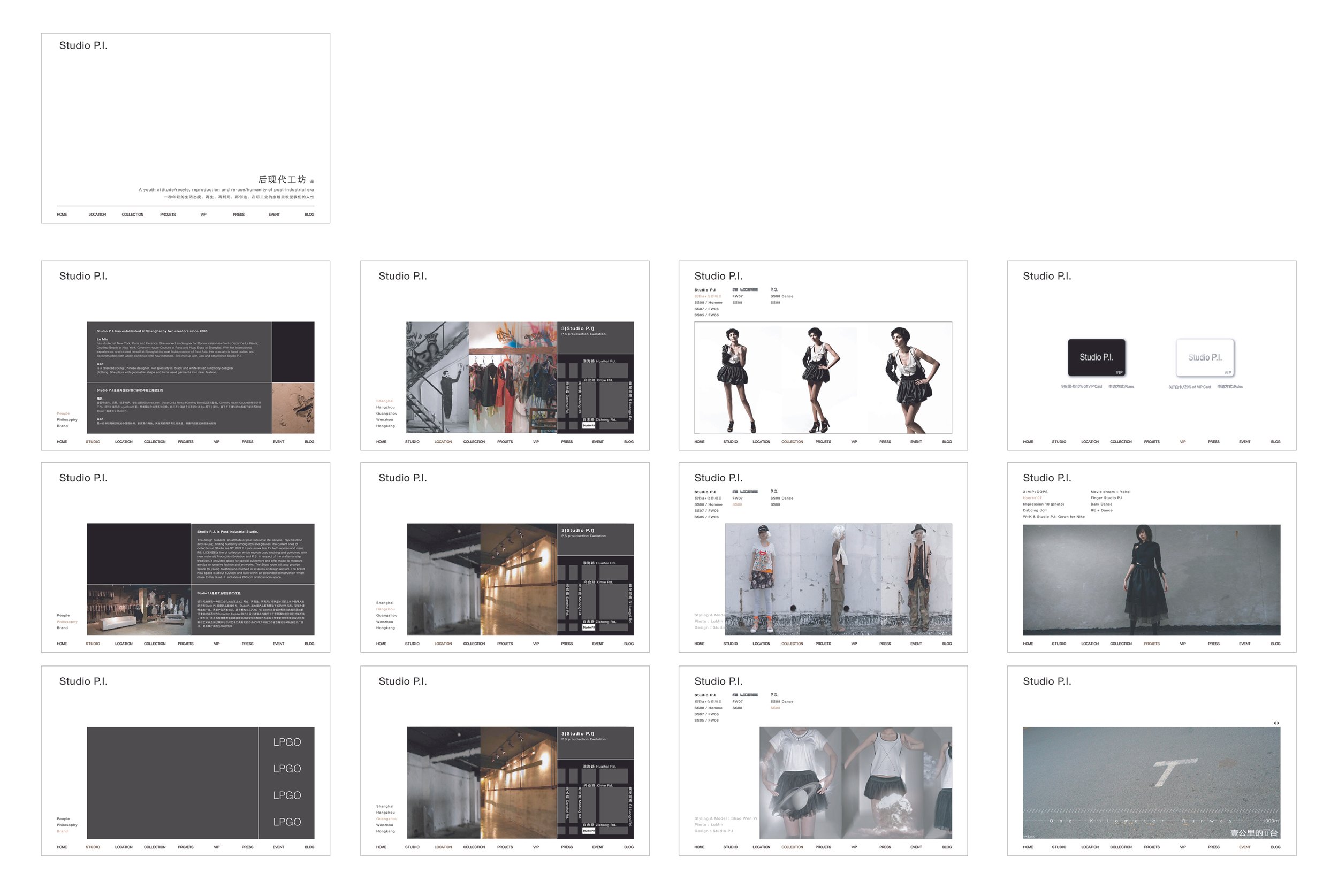
Studio P.I.: carrying a visual identity across three generations of the web
Listen — Studio P.I.|聆聽 1:43
Studio P.I.’s first website was an independently hosted Flash site, created when the studio was established. Its visual language grew from the same ideas as the brand itself: a considered relationship between typography, imagery, movement and empty space.
From Flash to Squarespace, then to an independent site
The website underwent two migrations. When Flash could no longer provide a suitable basis for the site, she moved it to Squarespace. Later, it became an independently hosted static website. Across these stages, the original design remained the reference point, giving the changing technical structure a consistent visual identity.
The Squarespace revision adapted the earlier composition to a more contemporary presentation. Full-screen imagery and deliberate areas of empty space expanded the original use of negative space, while the visual sequence and sense of movement continued to follow the Flash design.
Making navigation easier to see
Navigation was one area where the interaction needed to evolve. A menu placed along the bottom of the screen could be obscured by a browser’s controls or another bar at the screen edge. She introduced an animated response: selecting a menu item and entering a section brought navigation to the top, where it was easier to identify and use.
The lower navigation remained part of the design. These two positions allowed the site to preserve its original composition while offering a clearer way to move through the content.
One brand expressed through different media
The continuity goes beyond the website. Studio P.I.’s logo, shop displays, interiors, printed materials and related products share the same underlying brand concept. From the first Flash website to the current static site, the aim has been to carry that identity into a new medium, with changes to the interface supporting the same design logic.
Studio P.I.:讓同一個視覺識別延續於三代網站
Studio P.I. 成立之初,便建立了獨立託管的 Flash 網站。它的視覺語言與品牌本身出自同一組構想,透過字體、圖像、動態與留白之間的關係,形成工作室的識別。
從 Flash 到 Squarespace,再到獨立站
網站先後經歷了兩次遷移。當 Flash 已不再適合作為網站的基礎,她把網站移到 Squarespace;之後,又遷移到目前獨立託管的靜態網站。這幾個階段始終以最初的設計為參照,讓技術架構的變化仍然承載一致的視覺形象。
Squarespace 階段的改版,把早期構圖調整為更符合當時使用方式的呈現。全屏圖像與有意識保留的空間,延伸了原有的留白;整體視覺動線與動態感,則繼續沿用 Flash 網站的設計思路。
讓導覽更容易看見
導覽是需要隨使用體驗調整的一部分。放在螢幕底部的選單,有時會被瀏覽器控制列或畫面邊緣的其他工具列遮住。她因此加入動畫互動:當使用者選擇選單並進入內容區段,導覽會移到頂部,讓它更容易辨識與操作。
底部導覽仍然保留在設計中。這兩種位置,讓網站延續原有構圖,同時提供更清楚的內容瀏覽方式。
不同媒介中的同一個品牌
這種一致性也延伸到網站之外。Studio P.I. 的標誌、店裝陳列、室內空間、印刷品與周邊產品,都共享同一套品牌概念。從最初的 Flash 網站到目前的靜態站,設計的目的始終是把這個識別帶入新的媒介,並讓介面調整服務於同一個設計邏輯。
www.theutopium.co
theUtopium: design independence and an online sales channel
Listen — theUtopium|聆聽 4:10
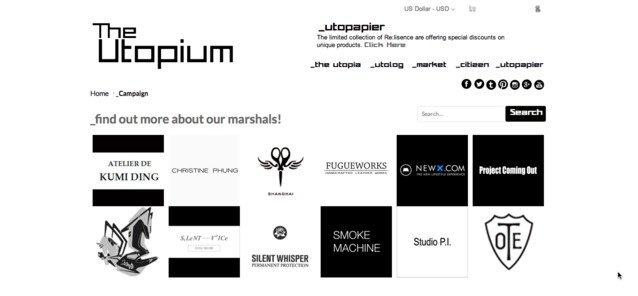
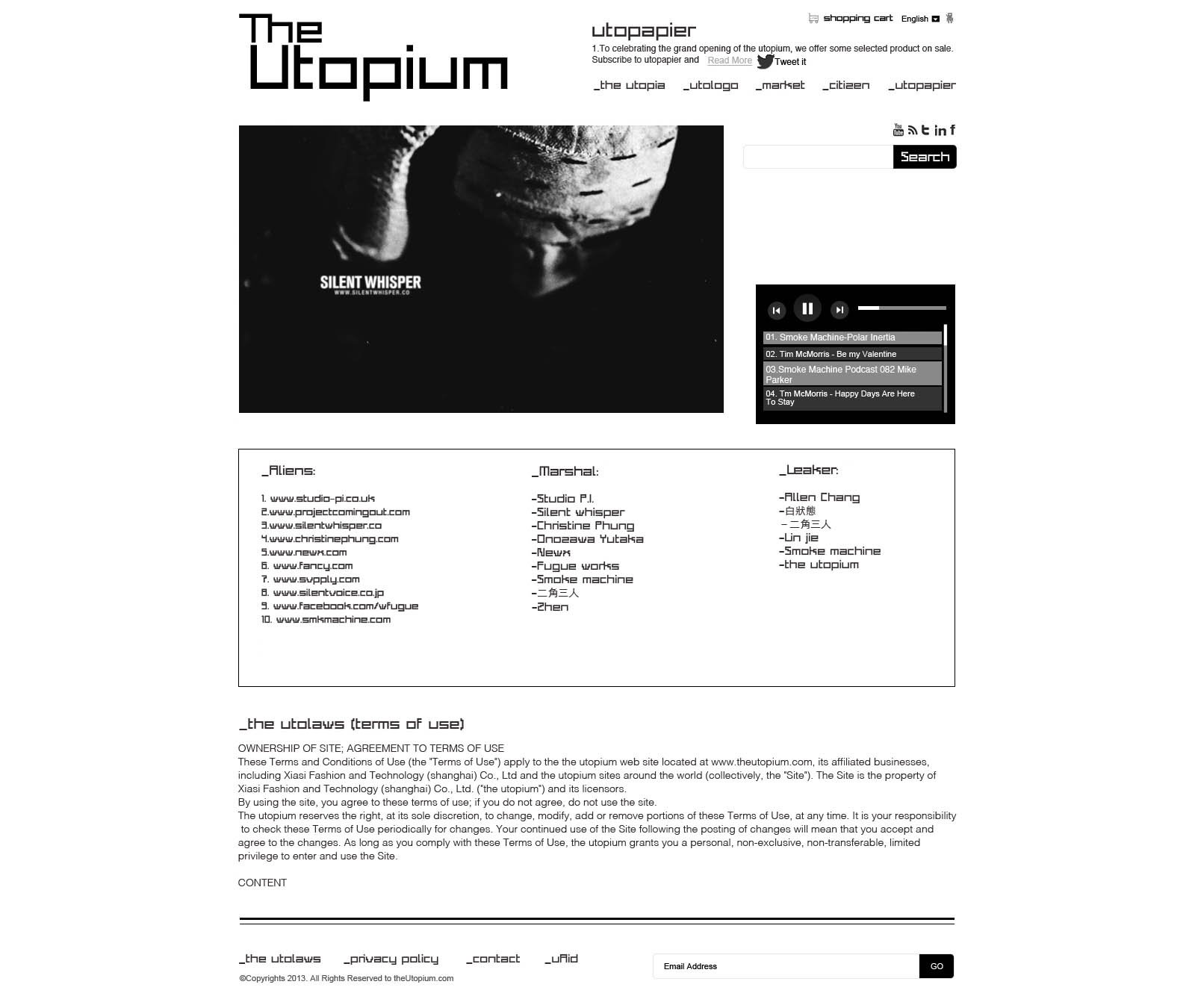
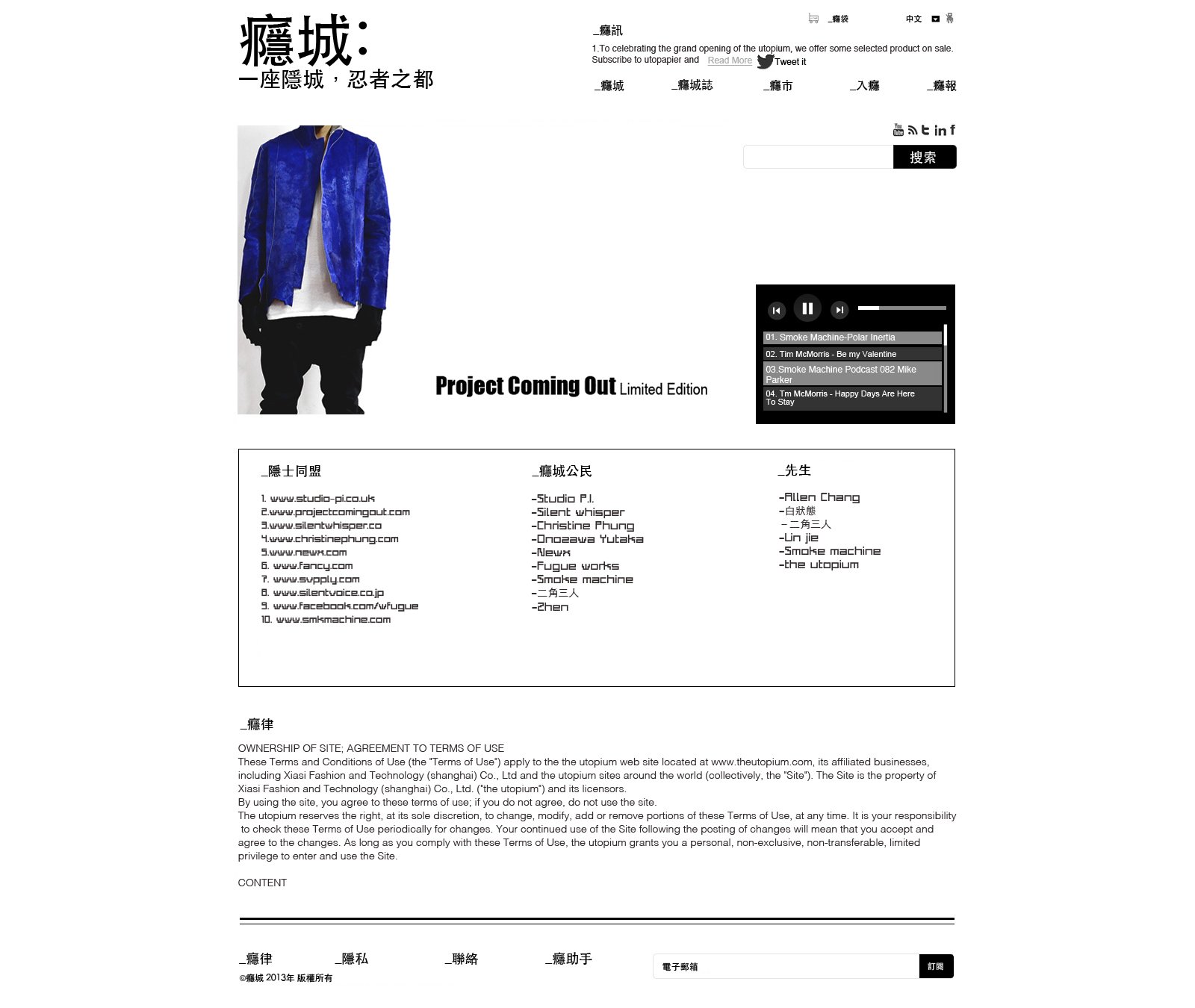
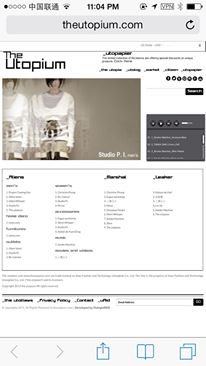
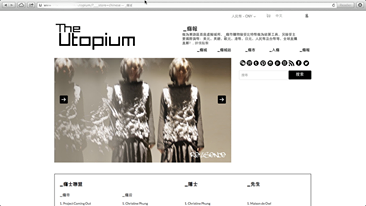
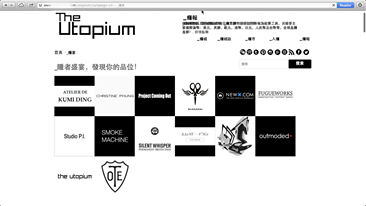
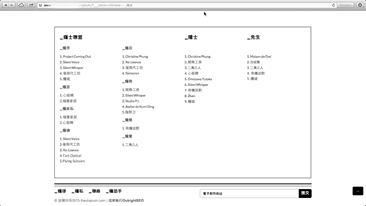
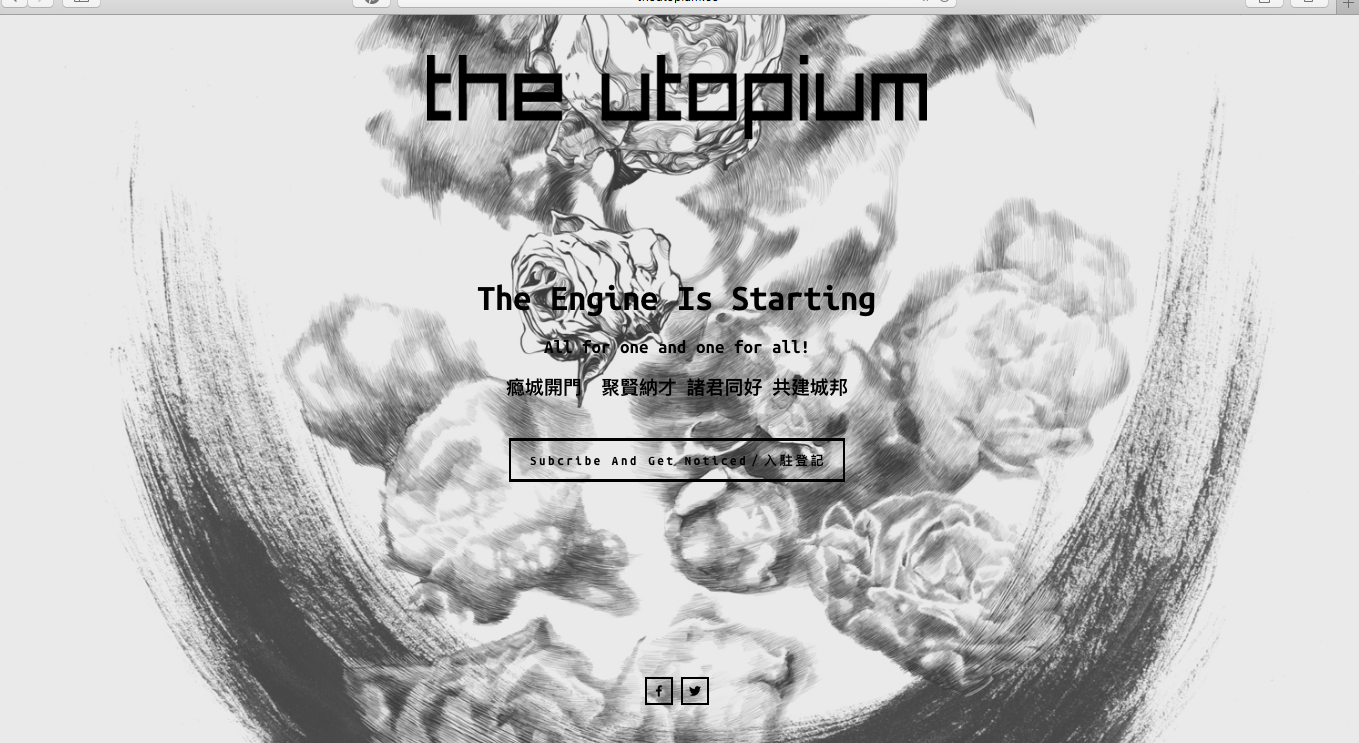
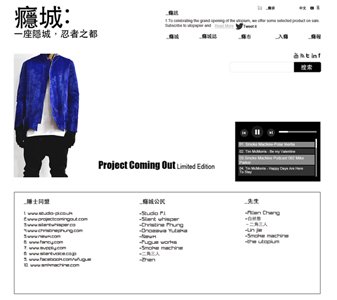
In 2012–2013, she independently financed the development of theUtopium, an online platform for independent designers, with a web-development budget of US$3,500. Its historical domain was www.theutopium.co. The website is no longer online; the images shown here are an archive of the project.
An idea carried forward from 2003
The idea had an earlier beginning. In her postgraduate work in France in 2003, she proposed a fully online, virtual fashion brand. The proposal was not supported at the time, but the possibility of building a fashion business through the internet stayed with her.
A decade later, running her own brand in China had made the question more urgent. She had experienced the limits of relying on consignment: stock remained tied up, payment depended on sales elsewhere, and returned goods brought the risk back to the designer. Changing partnerships and the difficulties of maintaining physical shops made control over distribution just as important as control over design.
For her, design independence meant being able to decide how a brand reached its customers. theUtopium was an attempt to establish that channel and to offer other independent designers a route through the same difficulties.
A first international collaboration online
She commissioned the development through a freelance platform. A freelancer based in Spain became the point of contact, and an Israeli development team carried out the website construction. It was her first experience of organising a whole web project through an international team working online.
The team recommended Magento as a foundation that could support future expansion. She accepted the proposal because she wanted a structure that could grow with the business, even though she was still learning what that choice meant in practice.
Turning a design brief into an achievable interface
She supplied a complete set of ideas through Illustrator layouts and hand-drawn sketches. Building every screen exactly as drawn would have exceeded the agreed budget. The team proposed a template close to her visual preferences, then adapted it with her.
That decision also helped her consider the difference between an artistic presentation and a shopping interface. She retained responsibility for the site’s language and character, developing the names of buttons, the wording and the design details herself.
The collaboration depended on careful written exchanges across time zones. She often worked between two and four in the morning in China, communicating through online chat and email. She captured the interfaces the team had built, marked revisions in Photoshop and sent annotated JPG or PDF files back for the next round. Chinese copy was supplied and positioned line by line with a team that did not read Chinese.
Building an assortment through a shared purpose
She brought together young designers through her international school network and through contacts in Shanghai. The collaboration grew from a common need to find another route to market. Designers retained their own stock and supplied products as orders required, allowing the platform to bring together an assortment without purchasing all the inventory in advance.
A collaboration with a platform specialising in Nordic-style furniture and home products expanded that assortment. Both websites used Magento, which made it possible to integrate part of the partner’s catalogue. The experience showed her how compatible infrastructure and cooperation between businesses could support a larger offer.
The difference between building and sustaining a platform
Completing the website did not resolve the cost of reaching customers. The outside funding she had hoped to secure did not materialise, and she could not sustain the marketing and publicity the platform needed. Her encounters with other online businesses also made clear how much larger their ongoing advertising budgets were than her own development budget.
Without continued investment, the project came to an end. It was an unsuccessful business venture, but completing the site, assembling the products and earning the participation of other designers remained meaningful achievements. The project tested a shared search for independence on a scale different from the commissioned collaborations of her own brand.
An archive of a realised experiment
Ten years separated the virtual-brand proposal of 2003 from the completed platform in 2013. theUtopium did not become a lasting business, but its archived designs record an important attempt to connect fashion, technology and an independent sales channel. The experience became part of the knowledge she carried into later website and AI projects.
theUtopium:設計自主與自己的線上銷售渠道
2012 至 2013 年,她以個人投資、3,500 美元的網站開發預算,建立了面向獨立設計師的線上平台 theUtopium。當年的域名是 www.theutopium.co。網站目前已不再上線,這裡呈現的是項目的存檔圖像。
從 2003 年延續下來的構想
這個想法有更早的起點。2003 年在法國進行研究生畢業項目時,她曾提出一個全線上、虛擬的時尚品牌。當時的提案未獲支持,但透過網際網路建立時尚事業的可能性,一直留在她的思考中。
十年後,在中國經營自己品牌的經驗,讓這個問題更為迫切。她體會到依賴寄售的限制:庫存持續佔用資源,回款取決於別人的銷售,而退回的貨品又把風險帶回設計師身上。合作關係的變化,以及維持實體店的困難,讓渠道的自主權變得與設計自主同樣重要。
對她而言,設計獨立也意味著能夠決定品牌如何接觸客人。theUtopium 是建立這條渠道的一次嘗試,也希望為面臨相同困境的獨立設計師提供另一種出路。
第一次透過網路組織國際合作
她透過自由工作者平台委託開發,由一位位於西班牙的自由工作者作為聯絡窗口,再由以色列的開發團隊進行網站建置。這是她第一次透過線上國際團隊,組織一個完整的網站項目。
團隊建議以 Magento 作為支援未來擴展的基礎。她希望事業有一個可以持續發展的架構,因此接受了這個建議,也在實作過程中逐步理解這項選擇的意義。
把完整設計構想轉化為可實現的介面
她用 Illustrator 版面與手繪草圖,提供了一整套設計想法。要逐頁完全按照草圖客製,會超出原定預算。團隊因此建議選擇接近她視覺偏好的模板,再與她一起調整。
這個決定也讓她思考藝術性呈現與購物介面之間的關係。網站的語言與個性仍由她掌握,包括按鈕名稱、文字內容與設計細節,都由她逐一發展。
跨時區合作依賴細緻的文字往返。她常在中國時間凌晨兩點至四點工作,透過線上聊天與電子郵件溝通。她截取團隊完成的介面,在 Photoshop 中標記修改,再把 JPG 或 PDF 文件寄回,進行下一輪調整。面對不懂中文的團隊,中文內容也由她逐行提供,並仔細核對位置。
以共同需要組織商品與合作
她透過國際同學網絡與上海的在地聯繫,集合了一批年輕設計師。這次合作源於共同尋找新銷售渠道的需要。設計師保留自己的庫存,按照訂單供貨,讓平台不必預先買下全部商品,也能組織多樣的選品。
她也與一個以北歐風格家具及家居產品為主的平台合作,擴充商品種類。雙方網站都使用 Magento,因此能夠整合合作方的一部分商品目錄。這段經驗讓她理解,相容的基礎架構與企業之間的合作,可以共同支撐更完整的產品供給。
建好網站與維持平台之間的距離
網站完成之後,如何接觸客人的成本仍然存在。原本期待的外部資金沒有落實,她也無法持續投入平台所需的行銷與宣傳。與其他線上事業接觸的經驗,讓她看見它們持續投入的廣告預算,遠遠高於自己的網站開發費用。
缺乏後續投資,項目最終停止。它是一次未能延續的創業,但把網站建成、組織商品,以及獲得其他設計師的參與,仍然是有意義的成果。這次合作以另一種規模,實踐了共同尋找自主出路的想法,也不同於她為自己品牌進行的委託合作。
已實現的實驗留下的存檔
從 2003 年的虛擬品牌提案,到 2013 年完成平台,中間經過了十年。theUtopium 沒有成為持續經營的事業,但留下的設計存檔,記錄了一次把時尚、科技與自主銷售渠道連接起來的重要嘗試。這段經驗,也成為她後來發展網站與 AI 項目時帶入的知識。
Shoes & Accessories
Studio P.I.|ProjectComingOut