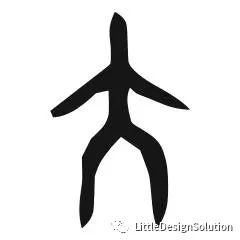
 這是一個充斥著「大」文化的時代。 [/caption]
重新整理了去年夏天的一篇文章,原本只是歐洲遠程課程的推廣文,今天更新官網時發現大半年過去了,歷史與現實就是這麼驚人的相似。而更痛快的是,這是我們的網站,因此不再需要各種大數據和新聞檢查。在自己的地盤暢所欲言真的是一種享受!
2019年中國人過年的時候,希臘人在雅典製造了非常暴力的騷亂,原因是馬其頓和希臘簽署了一個條約稱Macedonia這個國家為東馬其頓。破了產的歐豬墊底國唯一的驕傲就是馬其頓的亞歷山大的曾經偉大。在狂熱而又失去自尊的希臘人民眼中,馬其頓如果被別人代表了,那麼文化傳統就蕩然無存了。此時一眾的地中海文明締造者們都沒有紛亂現代史之前那段最大的截流的祖先驕傲來得重要。
希臘的現代意義就是曾經在公元前二世紀的征服,遙遠的東方這種情節也似曾相識。一個從沒有過近代中華民國廣闊疆域的漢民族,卻一直承繼著漢朝的狹窄領土範圍的文化正統,以多數派的自卑心理叫囂著要站起來不再被侮辱。而匪夷所思的是,這個擁有史無前例體量的國家,人民卻一直用無理取鬧的驕傲呈現無處歸依的自卑。
從各種文革式的辱華數字符號學,到改變人類基因,到論文抄襲造假,再到抄襲藝術創作30年的兩岸三地華人詐騙,民族道德底線一次又一次地被衝破,大到無可救藥的不自信和各種非人性的操作讓所謂的「無限大」顛倒了是非,扭曲了人性,重構了生物體的認知維度。而這一切的一切,皆源自一個「大」一個「天」卻沒有了一個「人」。
天大,地大,人亦大。故大象人形。凡大之属皆从大。- 說文解字
陝北文化:老爸叫「大」,所以秦國有大一統,漢朝叫大漢,對於它所熟知或者它所不能逾越的沙漠戈壁他也起了個名字:「大」漠,所以到了天可汗的唐代就有了「大漠孤煙直」,然後還有的「大」唐盛世。宋朝孱弱自不能算是「大」(但宋朝的文明確實很「大」). 到了明朝漢文化好不容易翻身了,所以就又開始了「大」明王朝。接下來就連入關的女真人也稱自己是「大」清帝國,然而我們知道大清這298年到最後真的不「大」,好不容易民國了康有為提出了「大同書」,但是相對較小的日本卻要建立一個「大」東亞的版圖。「大」承載的文化是統合性質的,「大」文化也必然有相對性,但從心理學的角度來看,「大」文化也同時是不自信,不追真相和恐懼的代名詞吧?
無節制擴張的大往往潛意識裡並不是為滿足慾望而緣起,亦不是探索未知的世界(這種英文通常使用的詞彙是:beyond,reach out,expension,而不是big,large, great,或者grand)。如果按這種思路來梳理,就不難理解為什麼西方社會是一個一直在反傳統和改進的社會了。
那麼在西方社會裡,什麼樣的人才算是「大」GREAT呢?
Revisiting an essay written last summer
Originally drafted as a promotional piece for a European distance course, it has now—half a year later—become an uncanny reflection of how history and reality overlap. The greater relief, however, lies here: this is our platform. No longer constrained by data filters or censorship, we can finally speak freely on our own ground.
In early 2019, as Chinese celebrated the New Year Athens erupted in violent riots. The cause: an agreement in which Greece formally recognized its neighbor as “North Macedonia.” For Greece—an economy in decline, clinging to a fractured pride in Alexander the Great—this was an existential humiliation. To the fevered populace, if “Macedonia” could be represented by another state, then Hellenic tradition itself was voided. Their pride in ancestral conquest outweighed the modern nation’s fractured political reality.
Greece’s modern identity rests in its ancient conquest. And for the distant East, the parallel is clear. A Han people without the vast territory once claimed by the Republic nevertheless cling to the narrower authority of the Han dynasty. They rally under the cry of “standing up again” out of a majority’s inferiority complex. Ironically, this immense nation, unprecedented in scale, often masks insecurity through a pride expressed as noise and defiance.
From Cultural Revolution-style semiotics of humiliation to gene modification, to plagiarized research, to decades of derivative art fraud across Greater China—the moral baseline has been breached repeatedly. An incurable grandiosity distorts right and wrong, twists humanity, and reshapes cognition itself. All of this originates from a fixation on “greatness” and “heaven,” while omitting the one element essential: the human.
“Heaven is vast, Earth is vast, Man is also vast…”
“Heaven is vast, Earth is vast, Man is also vast. Thus the great image takes human form. All things ‘great’ derive from man.” — Shuowen Jiezi
This is an era saturated with “Greatness Culture”
From Qin’s “Great Unification,” to Han’s “Great Han,” to Tang’s “Great Desert” and “Great Tang Prosperity.” Ming reclaimed Han identity with the “Great Ming,” and even the conquering Manchus declared the “Great Qing”—though its 298 years ended in decline. The Republic entertained “Great Harmony” under Kang Youwei, while Japan advanced its vision of a “Greater East Asia.” “Greatness” has consistently signaled authority and unification, but also, psychologically, insecurity, evasion of truth, and fear.
Unrestrained expansion seldom arises from desire or exploration
English terms—beyond, reach out, expansion—signify curiosity, not big or grand. Hence Western societies, built on continual critique and reinvention, have followed a different trajectory.
Political leaders, writers, thinkers, scientists, artists, musicians
Political Leaders: Alexander of Macedon is remembered as the Great. Napoleon, despite marching nearly to the Himalayas, is not. Louis XIV was the Sun King—expansive in ego, yet never labeled “Great”.
Writers: Those of immense influence are called “literary giants,” occasionally “great writers,” though often by self-ascription in modern Chinese. Shakespeare captured it best: “Some are born great, some achieve greatness, and some have greatness thrust upon them.”
Thinkers: The phrase “great thinker” is common, for their inquiries touch the unknown and the uncontrollable. Aristotle reminded us: do not believe hearsay “truths,” but trust one’s own critique.
Scientists: Rarely are they called “great scientists,” though “great inventors” like Edison abound. Invention alters the world deeply, but science still depends on proofs, peer recognition, and acceptance. Einstein cautioned: information is not knowledge; only experience grants understanding.
Artists: Western masters of the Renaissance were “Maestro,” not “great painters.” Such titles reflect reverence before the uncontrollable. Michelangelo declared: “I saw the angel in the marble and carved until I set him free.”
Musicians and Composers: Humanity has always struggled to master sound. Yet when one creates music that resonates across peoples and endures through centuries, we call them great. Mozart: “The music is not in the notes, but in the silence between.”
Designers and dictators
Designers: Many avoid the title “Master.” The marketplace, not the profession, attaches it for branding. True masters quietly resist visibility. Balenciaga: “Elegance is elimination.” Dieter Rams: “Good design is as little design as possible.”
Dictators: An exception. The “Great Dictator” thrives on fear. Unable to achieve true greatness, they prove control through domination. Hitler exemplified this: “The bigger the lie, the more it will be believed.”
In recent years, masterclasses have multiplied top foreign instructors—often lacking professorship credentials—are paraded as “Masters” in China. Yet elite institutions abroad demand decades of research and professional experience for faculty. Such “treasures of the academy” rarely leave their posts; it is self‑evident they will not easily journey to China.
During my studies abroad
Oscar de la Renta spoke at my graduation, Didier Grumbach recounted Balenciaga’s quiet closure, and Pierre Bergé honored my work at an exhibition. None of them ever claimed to be a “Master.” Each embodied humility, respect, and pursuit of the better rather than the grand.
True masters never call themselves so etymologically, Master means simply one who has mastered a craft. By that measure, every holder of a Master’s degree would be a “great master.”
Balenciaga again: “A haute couture designer must think like an architect, shape like a sculptor, see like a painter, harmonize like a musician, and reflect like a philosopher.”
Mies van der Rohe: “God is in the details.”
Once, apprentices introduced themselves as disciples
Today, insecurity drives many to self‑declare as masters. We seek borrowed authority, even algorithmic “masters” like AlphaGo Zero. Yet its victories were not magic—only repetition, computation, and practice, like Wu Qingyuan before it. Without superhuman cycles of self‑play, no collection of past games would have defeated Lee Sedol.
Michelangelo and Socrates
Michelangelo: “If you knew how much work went into it, you would not call it genius.”
Socrates: “The secret of change is to focus all your energy not on fighting the old, but on building the new.”
And yet we ask—Who am I?
A designer once asked me
She wanted to know how to form a collection. I said: listen to our lecture, The gap between you and Yohji Yamamoto is the mind of Da Vinci. Yohji himself advised: “Copy what you love. Copy, copy, copy—until in the midst of copying, you find yourself.”
Harmony cannot be taught, only practiced. Art and design cannot be transmitted like memorized text; they must be lived.
Socrates: “To know that one does not know is true knowledge.”
There are no shortcuts to creativity
Mastery is not a title. It is the lifelong process of practice, humility, and the courage to remain unfinished.
政治家:
馬其頓國王亞歷山大大帝是The Great,而同樣差點就到喜馬拉雅的拿破崙波拿巴並沒有成為Great。路易十四是太陽王,雖然心大但也沒有用「大」。
沒有什麼不能嘗試的--亞歷山大大帝(王家衛的台詞:見天,見地,見自己)
文學家:
具有深遠影響力的作家叫「文豪」,影響力非凡的在沒有諾貝爾奬背書的時代叫:「大」文豪,貌似也多數是現代漢語自冠的。
有些人生而為大,有些人成就偉業,有些人對他們有強大的信任--莎士比亞(重點其實是最後這種強大的意志力)
思想家:
通常會用到the great thinker,因為思想家所想的東西,大約都是我們所不知道,不了解,不可控的東西。
自由思考不要相信聽到的「真理」,相信自己的「批判」和評估--亞里士多德(不要道聽途說,比如在微信裡生活)
科學家:
很少有人說某人是「大」科學家,但是有人說「大」發明家,比如說愛迪生。為什麼科學發明很「大」因為它影響的範圍卻是很深遠,但是科學家通常只有天才和勤奮這種區分方法,而往往都還需要學術成就,比如論文什麼的來證明自己的觀點,然後至少被學術界普遍認可或者接受(衍生效應當然也有論文抄襲或者產出無用文字或非創造性觀點的危機)。
信息不是知識,真正獲取知識的源泉是經驗--愛因斯坦(別再吃羅胖嚼過的垃圾了,趕緊動手做事)
藝術家:
叫「偉大」的畫家的好像記憶中只有天朝的政治性冠名。基本上我們翻譯成偉大的畫家的那些西方名人,義大利文藝復興以降,也都是基本採用Maestro-master-grand master,為什麼呢?其實還是和人類對於不可控事務的敬畏。
我在大理石中看見天使,然後我雕刻直到讓他們獲得自由--米開朗琪羅(掌握技巧勝於投機取巧)
音樂家,作曲家,演奏家:
這些人都會有被稱為偉大的,因為人類對於音樂的駕馭能力很有限,基本上認知層面就是POP這樣,無論是在古代中國的五音還是西歐的十二平均律,又或者阿拉伯世界的二十四律。這個人類共同感知語言,溝通起來並沒有世俗的統一標準,聽眾的感受是做自由松散和情緒化的。因此一旦有人能夠通過音樂和普羅大眾溝通和產生共鳴還可以永世傳唱,那這個人當然是非常偉大的。
音樂不在譜中,卻在空白之間--莫札特(藝術源於感知,不要裝逼)
設計師:
其實設計師門自己都儘量避免被稱為大師,反而是這個世界其實對他們並不認可,因此在推廣的時候幫他們冠了個「大」以便追溯本源。然而我們各各設計領域裡面所崇拜的「大師們」卻都默默地希望自己不顯眼。
優雅的要義是消減--巴黎世家(看不見的才是優雅)
好的設計越少愈好--迪艾特雷姆斯(不要畫蛇添足)
少即是多--密斯范德羅(斷捨離)
當然有一種人是例外的,也絕對是「大」的-「大獨裁者」,為什麼這個會大呢?不言自明,恐懼不能變得偉大,所以要做一些事來證明自己可以控制很大的事情。人類對於自己不可以控制的事情,永遠是心懷敬畏的恐懼著的。
言者無心聽者有意,希特勒告訴我們一個殘酷的現實
征服一個國家先要讓它的人民繳槍--希特勒
謊言越大就越被相信--希特勒
去年開始,各種大師行大師班熙熙攘攘,今年來中國的大師特別多,人山人海,教育培訓領域的標配大概是這樣的:某某國外頂級院校(最好是Top 10的)外籍教師(這裡用教師是因為很多人都沒有教授的頭銜,或者按照我國或者美國的學術標準都不具備被稱為教授的資格,學歷不夠),非華人,非有色人種,最好是參與招生,或者曾經是招生官。教授的內容多為應試產業鏈的一環。
其實呢,在國外,很多院校對於教師講課的資質是有要求的,當然這和我們的「萬証之國」是有本質性區別的。國際頂尖學院,尤其是設計學院,要求教授都要有一定的研究項目,研究成果,或者至少要有10-20年的工作經驗,學歷可以放寬,但是工作和研究經驗是必須要有的,這一點非常清楚,因為高等學府是在培養畢業後直接面對社會的人才,假如他們的老師只會教原理,或者已經沒有從事相關行業的工作很久了,他們所傳授的技藝是否符合當今社會的需要也是一個問題。看到這裡,你應該明白了,這樣的人是很難找的,而能找到有這樣經驗和資質的老師是相當困難的,所以每個學校也都會有幾個鎮山之寶。那麼這些鎮山之寶會不會輕易的不遠萬里來中國呢?不言自明。
記得在歐美留學的時候,每年學校都會請到業界的知名或著名設計師來學校演講,而這些在中國被稱作大師的人,沒有一個自詡為大師。 在美國的畢業典禮,我們請來了Celine的前設計總監:Oscar de la Renta,不僅在美國,即使在歐洲,他的年代,他也堪稱一代名師了,但他為人超級謙虛,也從不以大師自居。
在法國,我們請前法國時尚工會的主席Didier Grumbach來講課,他給我們講了他年輕時去找Balenciaga推銷工業機器的故事,從他的口述中我們知道大師並沒有那麼大牌,反而是在靜靜的聽完這個推銷後,安靜的關閉了自己的品牌。
畢業典禮,Yves Saint Laurent的老公Pierre Bergé來出席我們的展覽,他指著我的設計作品詢問這是誰做的,然後很nice的祝賀我並握手,在他的眼裡只有YSL是大師,但是他對每一個人都很尊重,也不需要用某種「大」來增加什麼。
真正的大師都不會稱他們自己為大師,他們都是不求最好只求更好的那一類。所以說文解字告訴我們:大就是人,大追隨人,「大」沒有什麼了不起的,人是最了不起的。
我們的時代是一個科技創意大爆發的時代,也是一個商品經濟凌駕於創意之上的時代,就像一台工業革命的蒸汽機,引擎開動,轉動不止,所有的東西都產業化了,所有的製造都產品化了,鏈化導致的利益驅動,讓我們甚至違反了AI都在遵循的數學和邏輯學的規律。我們忘記了有價值的東西永遠不可能是多數的,而不可能的多數也是不可能集中量化的。
我們當然也忘了世界上是沒有一個Maestro會教你應試技巧的,因為他們從來都是靠精研技能來實現與眾不同的。而這個重複操作的方法又豈是三言兩語能傳授的?
Master的本意其實不過就是掌握某種技巧的人,因此把它翻譯成「大師」是在並不貼切,要真是那樣的話,凡是獲得碩士學位的人就都是「大師」了。
一個高定設計師必須要在設計時具有建築師的頭腦,在塑形時持有雕塑家的技巧,在用色時擁有畫家的眼光,在混搭時含有音樂家的和諧,在思考時保有哲學家的清醒--巴黎世家(成為是這樣的人估計要在他的工作室裡混個至少十幾二十年)
上帝是細節--密斯范德羅(觸動靈魂的不是大師,是自己的感知)
曾幾何時,我們的前輩介紹自己都是「師從名師XXX」,這個時代,我們不自信地自己就稱自己做大師。我們渴望能師從大師,其實無非是像沾佛一樣沾點功能性的喜氣和幸運,讓自己和別人不同,卻忘了自己到底是誰。於是產業應運而生地製造給我們一系列West world模式的娛樂產品,你沒猜錯,在不久的將來,也許你會迎來一位像Alpha Go Zero那樣的「大師」給你講課。然而你其實還是會忽略Alpha Go Zero學習成長的過程,其實和吳清源的學習過程幾無二致,都是自我的刻苦與悟性。而這個也斷然是金錢所不能買到的。假如Alpha Go Zero不是以超人類能力的運算速度重複學習組合,那麼我們花錢為它買來的全世界的棋譜並不能幫助它打敗李世石九段。
假如你知道這工作量有多大,你就不會叫它天才之作了--米開朗琪羅(量變產生質變,沒有捷徑,「彎道超車」是反人類的)
只有追求更好才能存在得更好--蘇格拉底(這個好是自我的價值,而不是他人的名望)
我們苦苦追尋尋找一種不屬於自我的外在,我們無從尋找,只好去挑選別人的背書,然後我們面前就出現了超乎我們能力所能辨別的各種「大」和更大的東西來填補我們不自信的慾望。我們把這些別人的「大」貼在了自己的身上,感受著自己花時間和經歷投資來的各種符咒,滿足者自己的良好感覺,我們每天開口都會提到至少上千次的「我」,卻往往很難回答一個簡單的問題:我是什麼?
知己知彼,百戰不殆--孫子
曾經有一位設計師來諮詢:我設計很好,但是我不知道如何把它組合成一個系列,不知道怎麼把控。於是我請她來聽我們的Steam教學課,你和山本耀司的差距就是一个达芬奇的脑袋。這位設計師沒有參與,但她喜歡的設計師曾經這樣說:
不停複製你喜歡的東西,複製,複製,複製,直到最後在複製中找到自我--山本耀司
我們無法教給你速成為「系列之王」的技巧,我們只能引導你感受和觀察事務的方法,激發你創作的慾望,改變你審美的方式,而最終那個創作的人是你自己。
曾經有一位設計師報名上課學習我們的斐波那契数列和十场经典时尚大秀的永恒密码,還沒有完成第一課的作業,就提出了延期,因為讓她感到失望的是課程裡沒有出現她想知道的:大師是咋把那件衣服作成的?這位同學在聽完第一次課後的朋友圈裡曬了一張照片,鮮花,電腦和物品的擺拍,卻沒有把黃金分割的視覺比例運用到照片的裁減上。
工程師從經濟規律中找到靈感,遵從精密的機械計算,讓我們更符合普世法則,最終實現和諧--考布
和諧不是教師可以傳授給你的,而是通過不停的操作與嘗試來感受,調整修正和完成的。而假如一個創作者不懂得如何達到和諧,那麼受眾就不可能在這件作品中產生美的共鳴。藝術和設計本來就不可能像背誦古詩文這樣以文字來傳遞。
知之為不知,是為知也!--蘇格拉底
天才是永恆的耐心--米卡朗琪羅
創意沒有捷徑,大師與你我無關。